

Pharmaceuticals & Life Sciences
From batch and expiration dates to serialized 2D codes: We help pharmaceutical, medical technology, and life sciences companies reliably label their products and packaging.
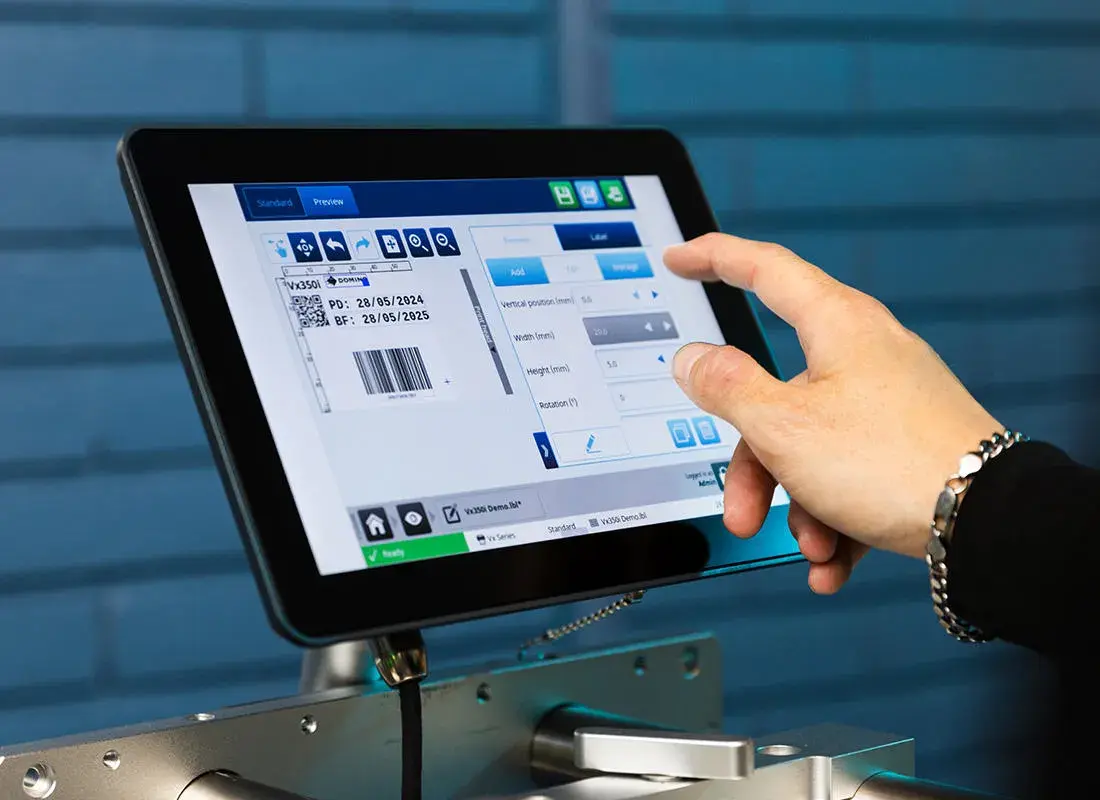
Together, we tailor the marking technology, print quality, and integration to the product, packaging material, and production process.
Contact UsRequirements in Day-to-Day Production
High Standards
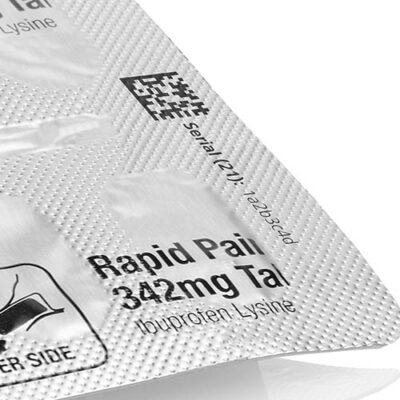
In the pharmaceutical, medical technology, and life sciences industries, variable data must be reliably applied to small packaging surfaces. At the same time, unique identification, clearly legible codes, and traceable production processes are essential. Typical applications range from blister packs and folding cartons to vials, ampoules, labels, and outer packaging.
Data Accuracy
Applying Variable Content Correctly
Batch, serial, and date information must be assigned to the correct product and production order.
Traceability
Uniquely Identify Products
Barcodes and 2D codes facilitate the identification and tracking of products and packaging.
Documentation
Keep a clear record of exams
Technical implementation, changes, and testing activities must be documented in accordance with the project requirements.
Uniquely Assign Variable Data
What is being labeled?
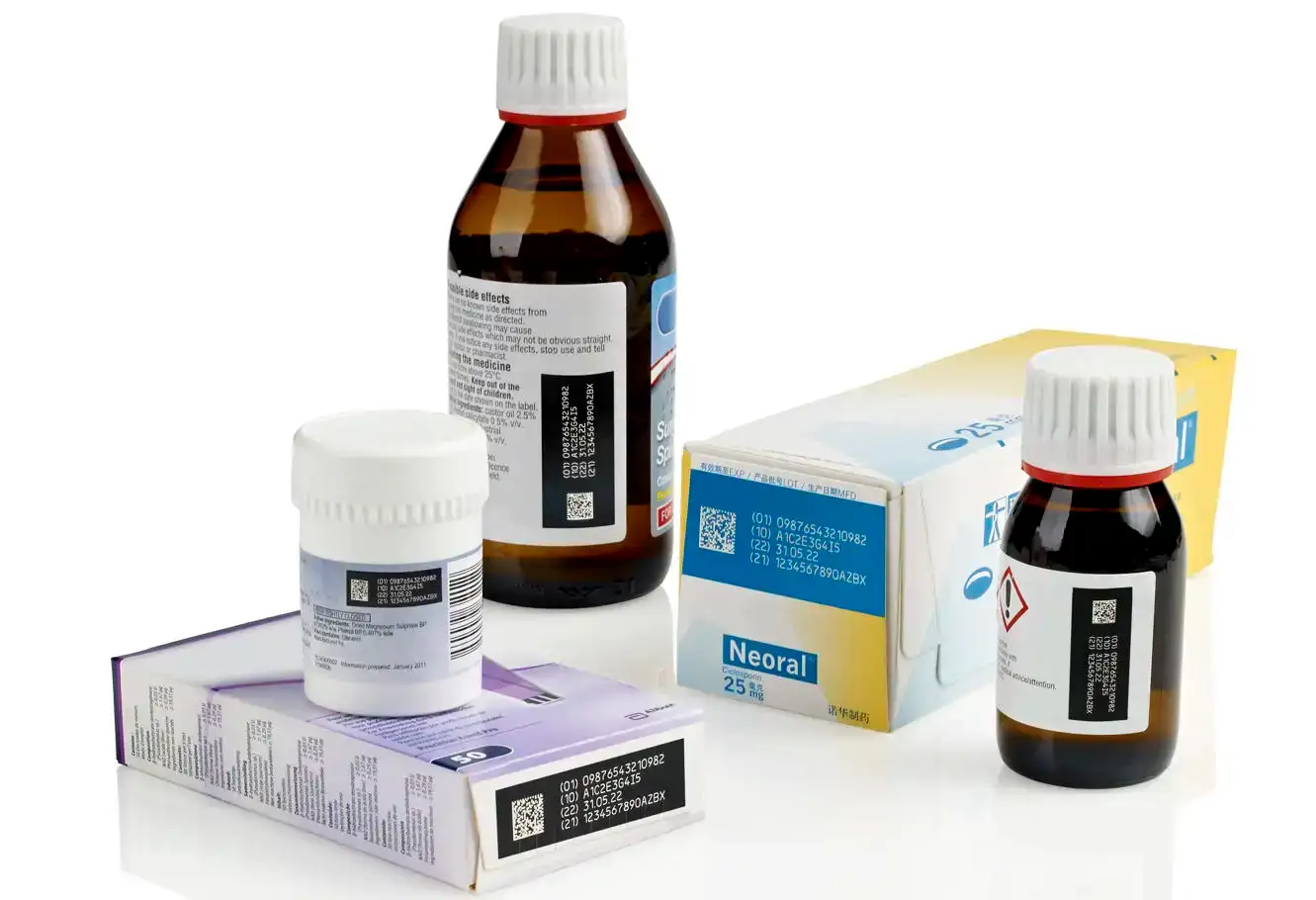
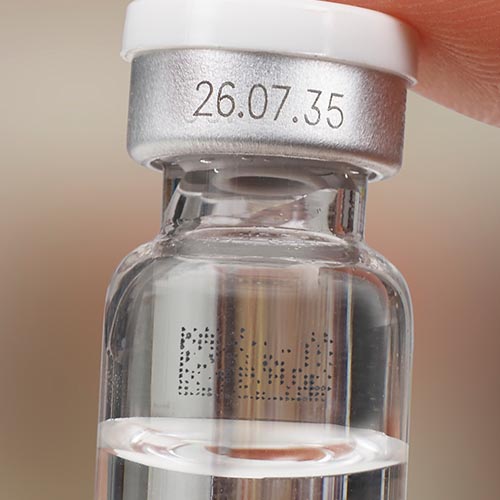
Pharmaceutical products and medical devices require labels that are easy to read, machine-readable, and uniquely assigned. The focus is often on lot and serial numbers, expiration dates, and 2D codes for identification and traceability. Domino Life Sciences highlights these requirements specifically for blister packs, folding cartons, labels, flexible materials, and glass and plastic containers.
Lot & Serial Numbers
Uniquely Identify Products
Batch numbers assign products to a production unit. Serial numbers allow for the unique identification of individual packages or products.
Expiration & Date Information
Variable Date Information
Expiration dates, production dates, and other dates must be reliably assigned to the correct product and production order.
QR & Data Matrix Codes
Encoding Product Data in a Compact Format
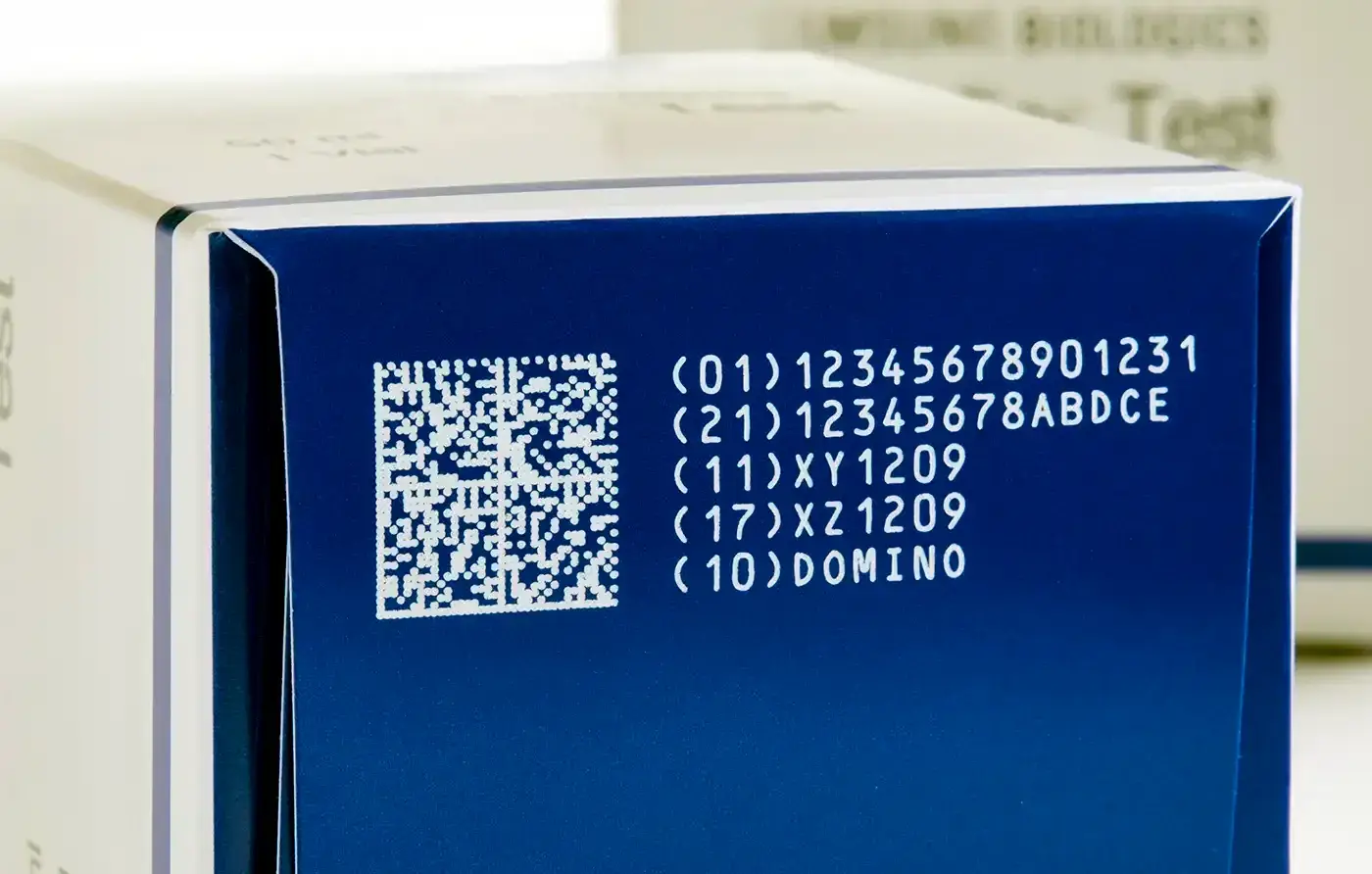
2D codes can combine product identification, lot number, expiration date, and serial number in a machine-readable format. In regulated pharmaceutical applications, the Data Matrix code plays a particularly important role.
Typical Packaging
Label in various ways
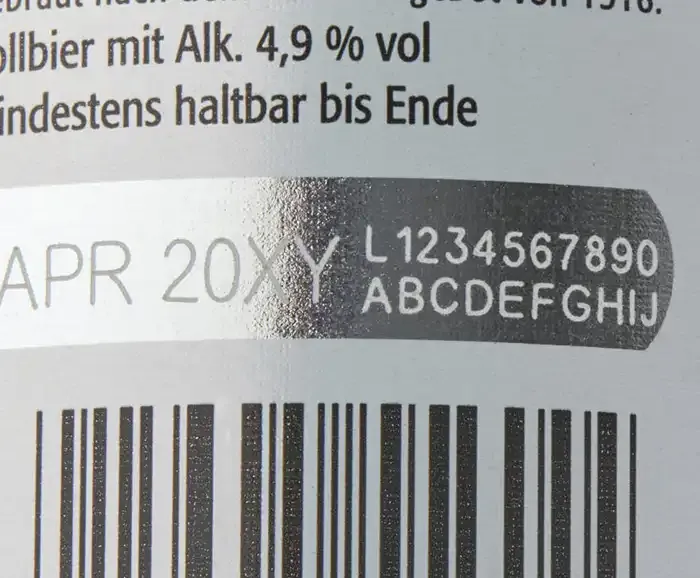
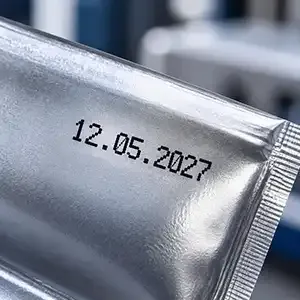
Depending on the product, the label is applied directly to the packaging, a closure, or outer packaging. The material, shape, and packaging process influence the choice of the appropriate technology.
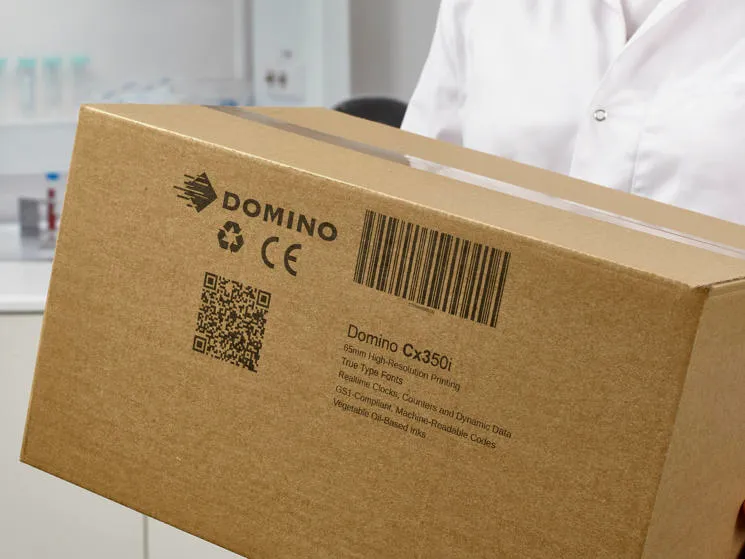
Tailored to packaging and the manufacturing process
Appropriate Technology
The choice of marking technology depends on the packaging material, available space, code content, production speed, and the requirements for readability and durability.
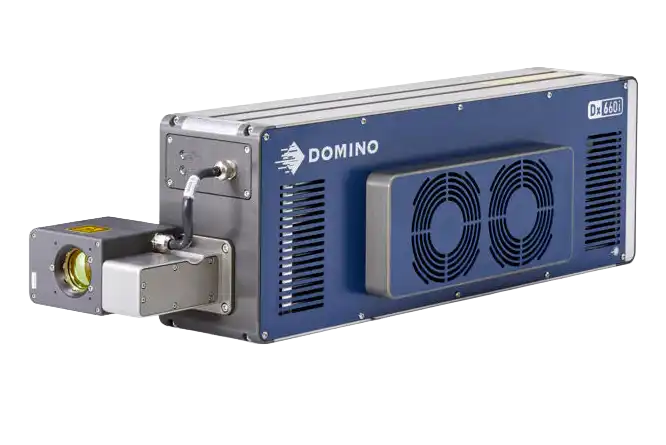
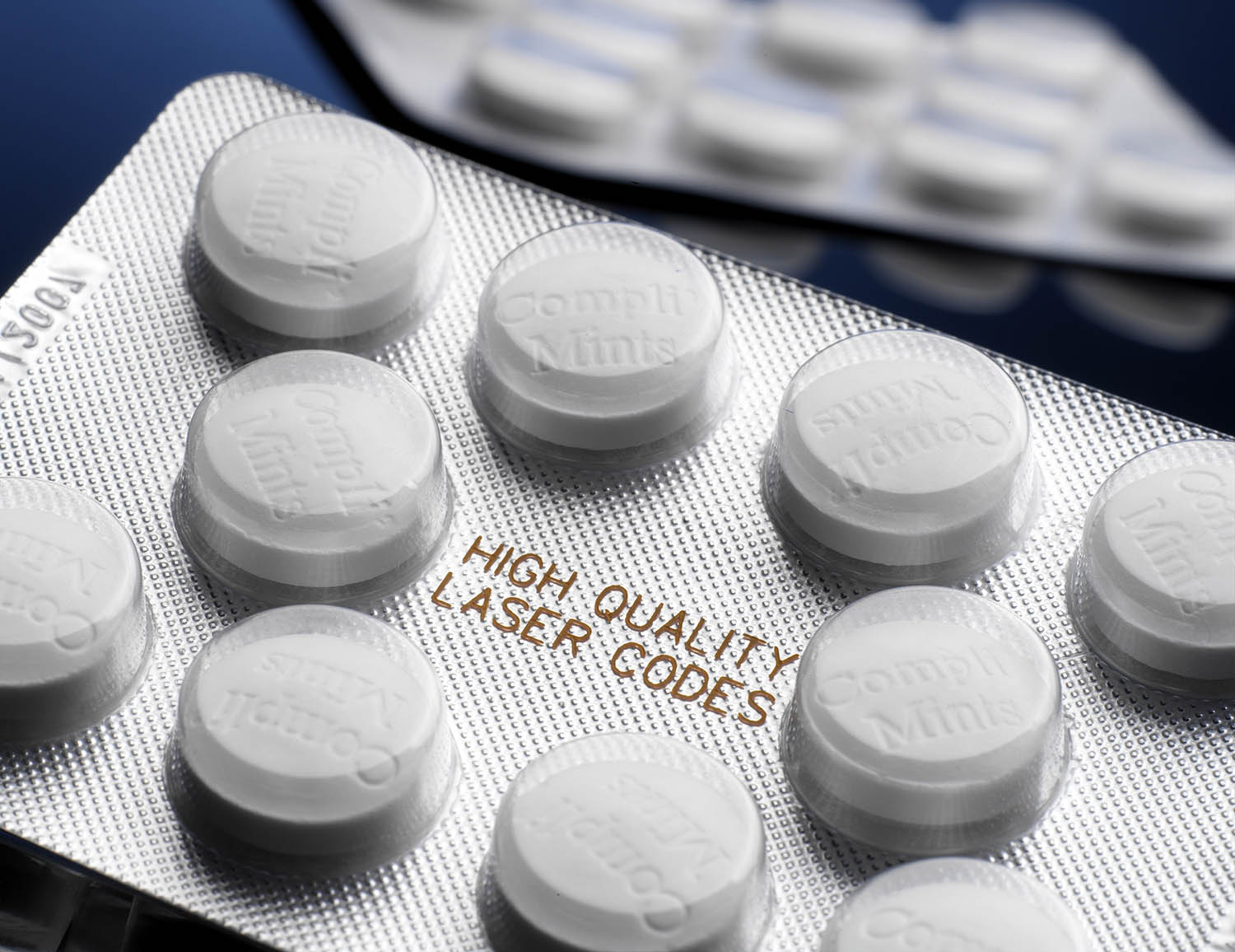
Laser Marking
Laser marking marks materials completely contact-free, permanently, and without any consumables. A precise beam of light ensures maximum abrasion resistance.
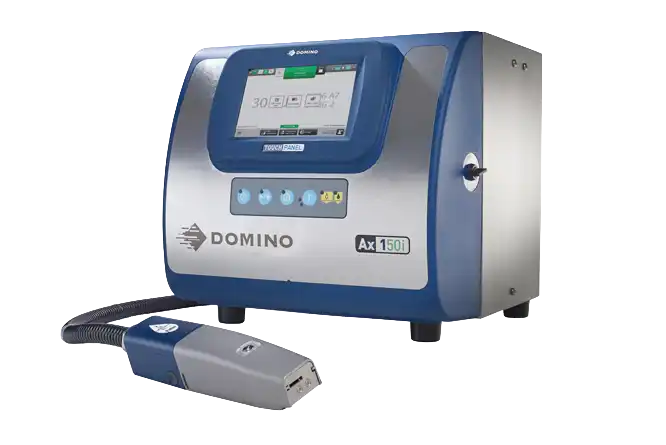
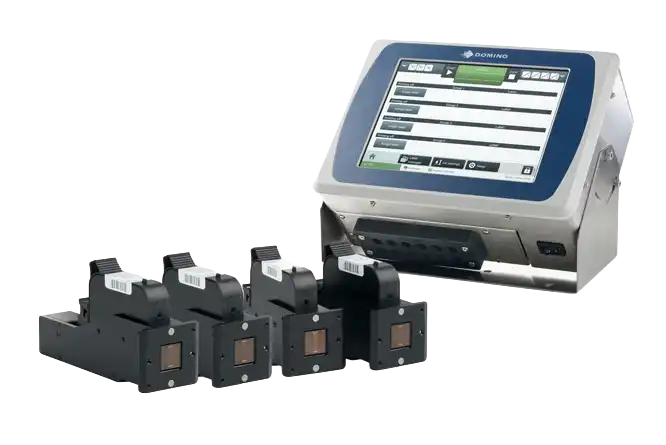
CIJ printer
Continuous inkjet (CIJ) printers mark products extremely quickly and without contact during the production process. They produce razor-sharp codes on almost any surface.
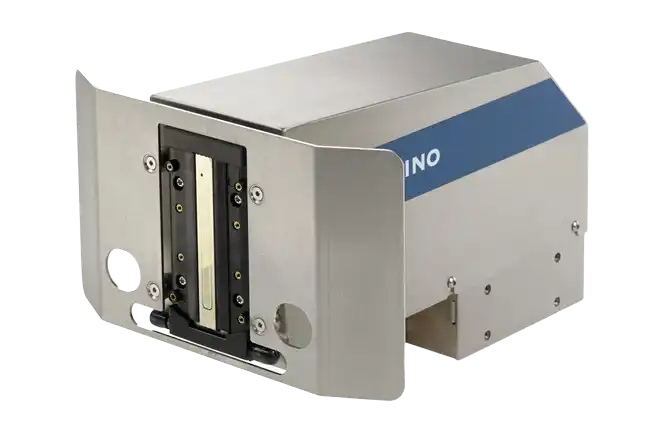
Large-character printer
Large-format printers are optimized for printing on secondary packaging, such as cardboard boxes, in industrial settings. They can flexibly apply large logos and barcodes.
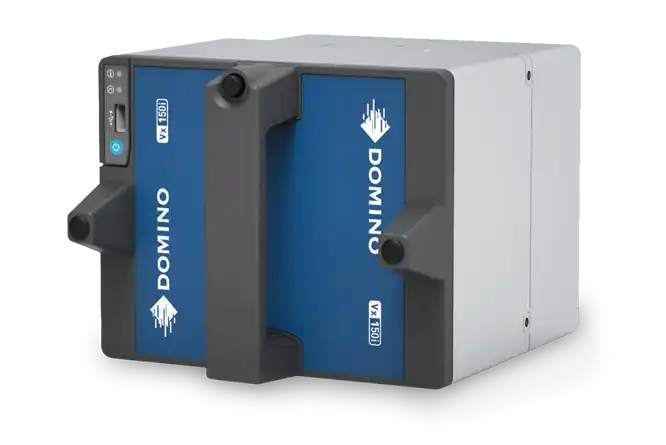
TTO Printer
Thermal transfer overprinters (TTO) mark flexible packaging, such as films and tubular pouches, with excellent precision. A thermal print head transfers the ink using heat.
Technical Documentation
Pharmaceutical Validation
Labeling systems in regulated production environments must not only function reliably; their technical design and the tests performed must also be documented in a traceable manner.
We provide project-specific support in the following areas:
- technical documentation
- Test Reports
- IQ Activities
- OQ Activities
- PQ Activities


Contact Us