
Labeling on Glass
Reliable marking of glass containers using lasers or ink: durable, high-contrast, and precise.
Labeling on glass is a key process in the beverage, pharmaceutical, and cosmetics industries. Glass bottles, ampoules, and vials require clearly legible batch codes, expiration dates, or serial numbers.
Due to the smooth surface and transparency of the material, industrial marking places high demands on marking technology. With the right systems and specialty inks, this process can be reliably controlled.
Contact UsWhen Glass Labeling Is Crucial
Ensuring Traceability:
Serial numbers and lot codes enable complete documentation throughout the entire product lifecycle.
Ensuring product safety:
Expiration dates and production dates remain permanently legible on all glass containers.
Protecting Brand Integrity:
Logos and manufacturer-specific features strengthen the brand image and help prevent product counterfeiting.
Challenges
The properties of glass as a material require precise adaptation of the printing technique:
Ink Adhesion on Smooth Surfaces
Extruded products such as cables or hoses rarely move through the line in a completely rigid manner. To ensure a clear print image, the print output must be precisely synchronized with the line speed using appropriate sensors.
Contrast and Readability
Many materials are marked while hot. In addition, surfaces vary greatly: from smooth PVC and PE to silicone and rough rubber. Inks and laser settings must be adjusted to suit the specific surface and temperature.
Resistance to moisture and abrasion
In extrusion, speeds of several hundred meters per minute are common. The markings must dry extremely quickly, remain high-contrast, and be applied without causing any downtime.
Would you like to request a free test print on your product?
Go to the Sample Print ServiceAppropriate Technologies
The choice of the right process depends on the type of glass, the coating, the line speed, and the requirements for the washing units. For glass containers, two technologies in particular have become the standard:
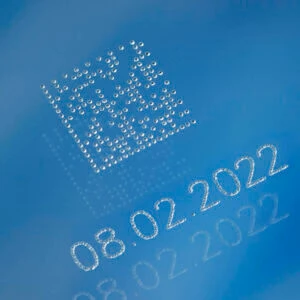
Laser Marking
Laser systems create markings directly on the glass without using consumables, through thermal micro-engraving or color-change on coatings. The result is completely resistant to heat, moisture, and cleaning agents.
Advantages: No drying time, tamper-proof, extremely solvent-resistant, and no operating costs.
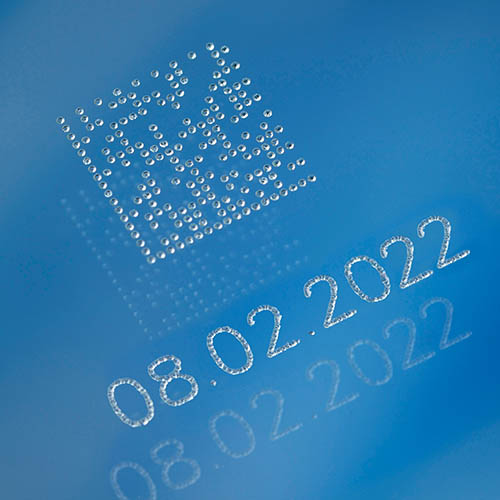
Typical applications: Permanent markings, 2D Data Matrix codes, and tamper-proof logos and graphics on tinted, satin-finished, or coated glass.
Learn More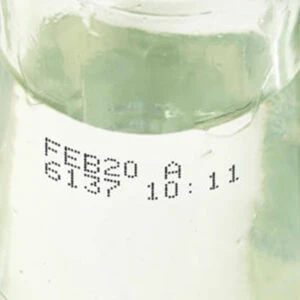
Continuous Inkjet (CIJ)
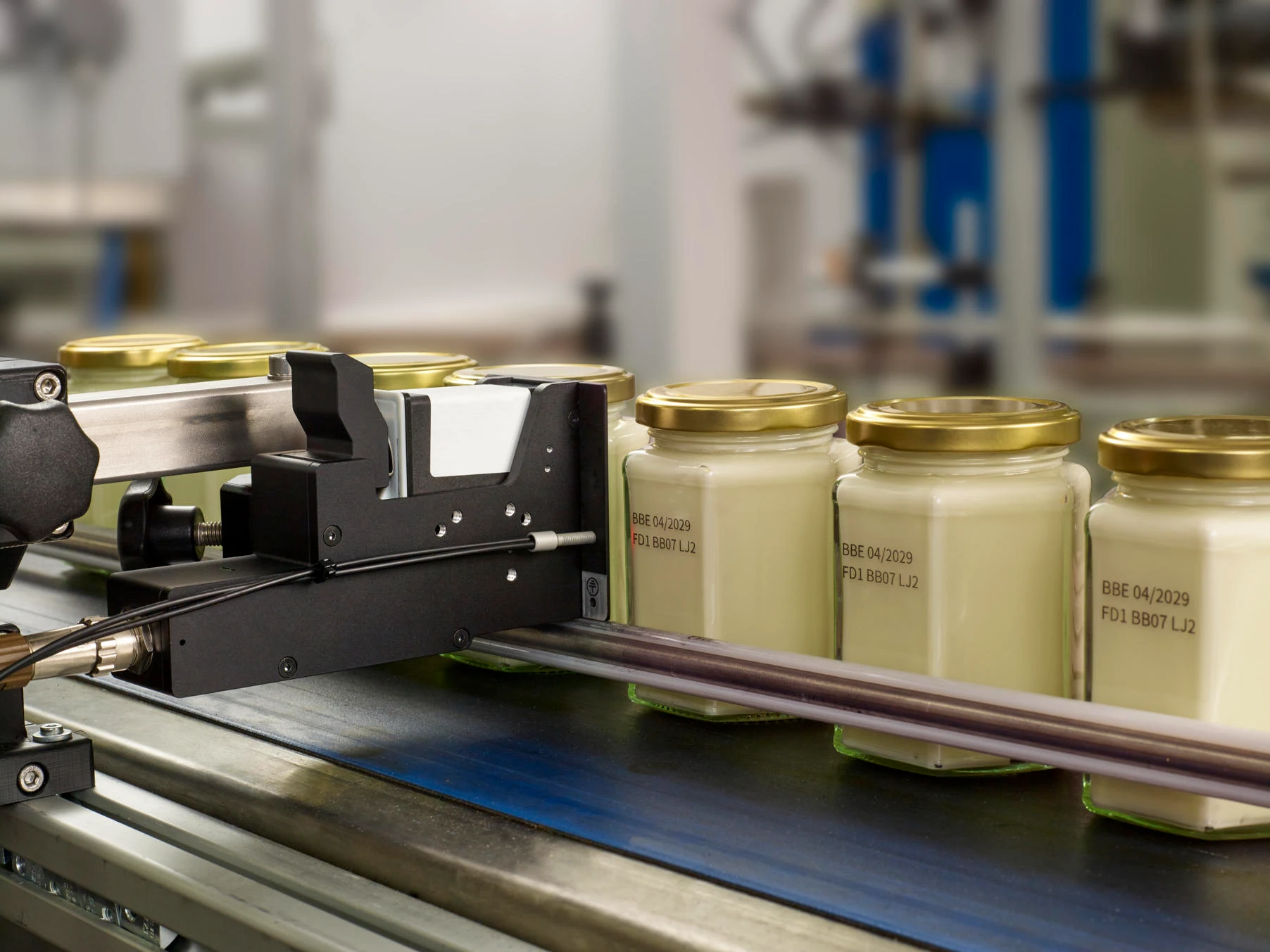
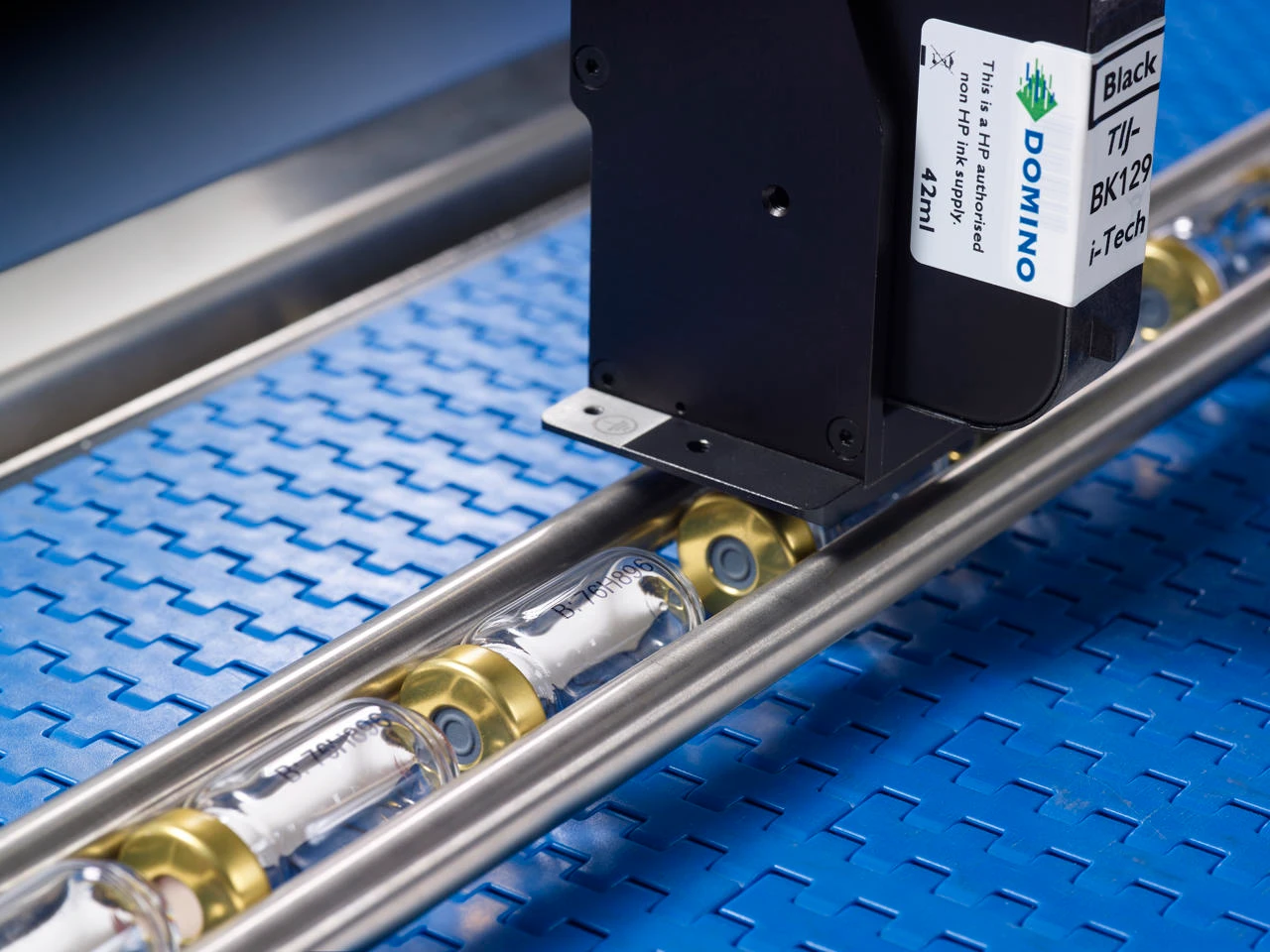
CIJ systems print variable data contact-free at high production speeds. Special glass inks offer solutions for every requirement: from quick-drying inks for humid environments to high-contrast inks in white or yellow, and alkali-soluble inks for reusable bottles.
Advantages: High flexibility when changing data, high contrast, and trouble-free printing on wet bottles immediately after filling.
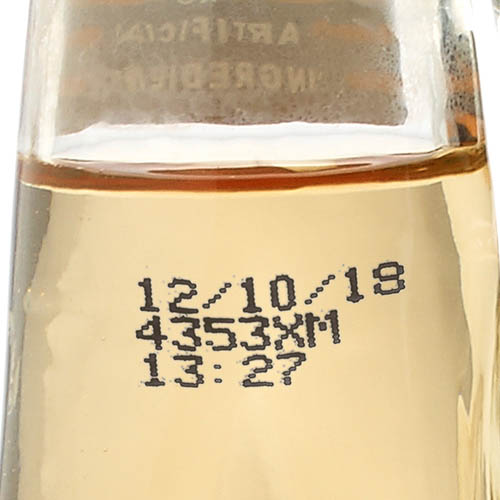
Typical applications: best-by dates, lot numbers, and variable codes on curved, rotating, or dark glass containers.
Learn More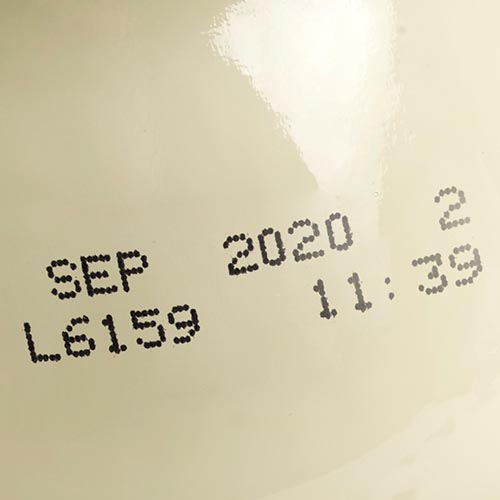
Print Samples
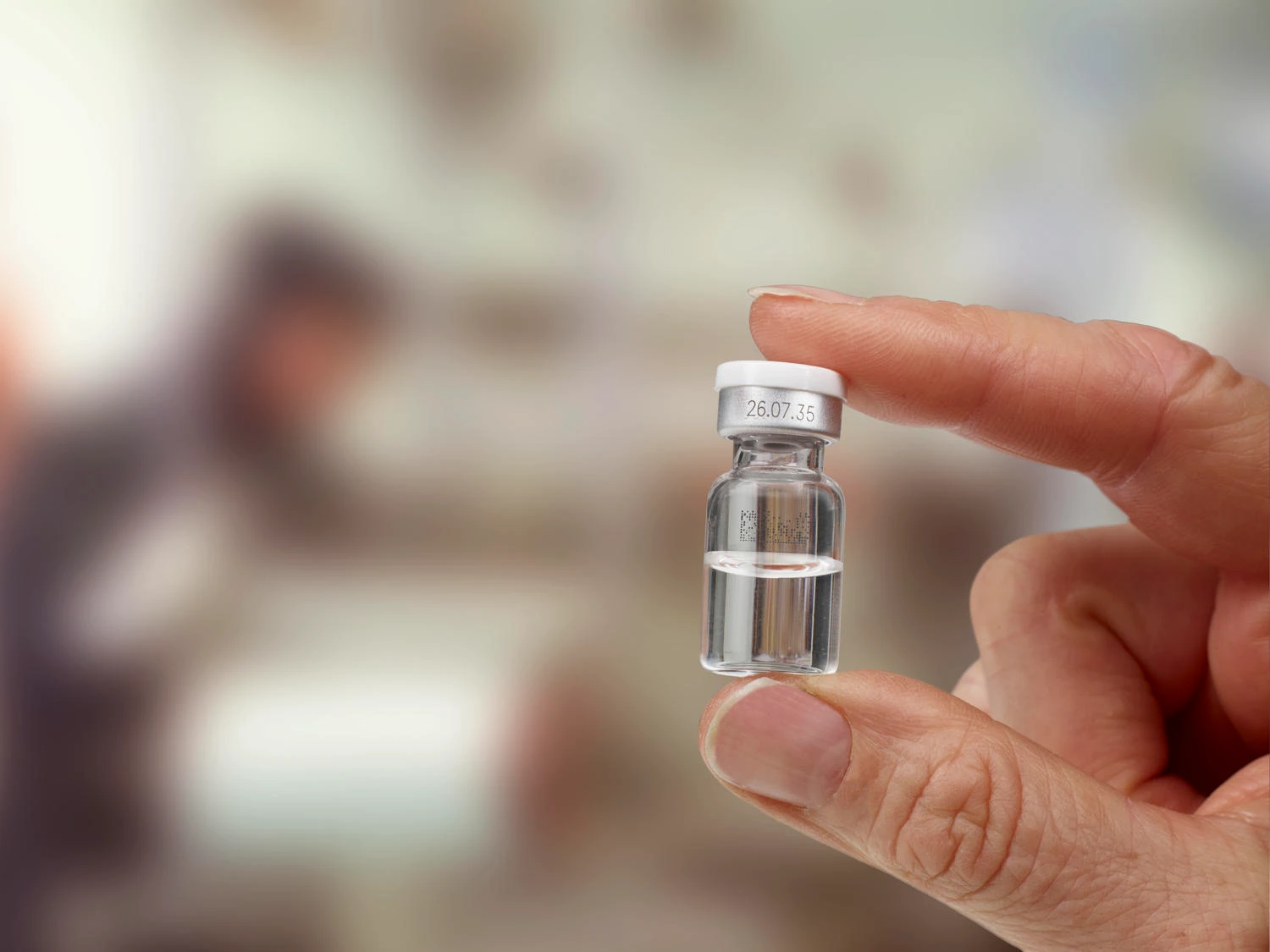
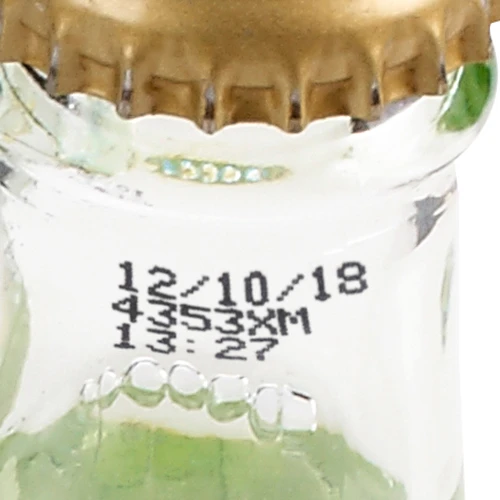
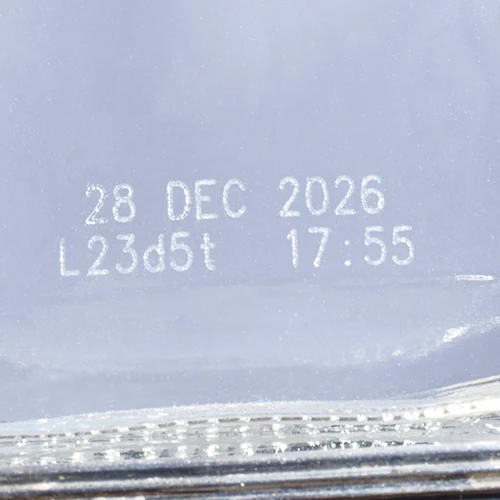
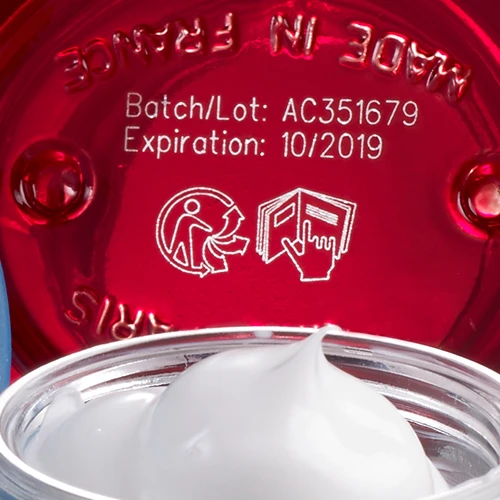
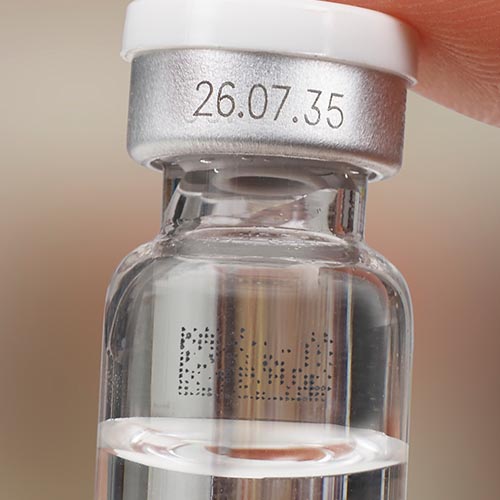
These application examples show ink and laser coding and marking on various glass containers. Whether it’s high-contrast expiration dates on dark beer bottles, fine 2D Data Matrix codes on pharmaceutical glass vials, or abrasion-resistant logos on perfume bottles: These examples illustrate how technology and material are tailored to achieve a smudge- and wash-resistant result.
We have a solution for every type of glass and every production environment. We test the labeling on your original containers free of charge to evaluate adhesion, contrast, and wash resistance under real-world conditions.
Send us your material sample for a free print test on your product.
Case Study:
Glass Labeling at the Caballero Group
The Spanish Caballero Group relies on Domino laser systems for marking glass bottles. At the winery in El Puerto de Santa María, the laser technology was integrated into the existing bottling line.
Problem-Solving
Understanding Your Needs: We analyze your glass product, the filling environment, and the requirements for legibility and durability.
Suggest a solution: You will receive a proposal tailored to the type of glass, surface finish, and line speed.
Testing Feasibility: In our tests, we evaluate adhesion, contrast, and wash fastness directly on your material samples.
Integration and Support: We provide technical support throughout the selection process, integration into your production line, and commissioning.

Contact Us