
Labeling Cardboard Packaging
Precise, durable codes on folding cartons, trays, and shipping boxes.
Cardboard packaging comes in many forms, ranging from printed folding boxes to sturdy trays and shipping cartons. Each material has its own labeling requirements: smooth or absorbent surfaces, high line speeds, or reliable readability during the logistics process.
With the right technology—whether inkjet, laser, or label—coding can be applied efficiently and permanently. It is crucial that the print position, material, and content are perfectly aligned. That’s exactly where we come in.
Contact UsWhy is it important to label cardboard packaging?
Tracking Products: Batch, serial, or manufacturing numbers on cardboard packaging ensure traceability. This is essential for compliance with legal regulations, quality assurance, and in the event of product recalls.
Managing Logistics and Warehousing: Cardboard packaging is often used as secondary or tertiary packaging. Clearly legible codes, barcodes, or DataMatrix labels facilitate internal material flow, warehouse logistics, and automated shipping.
Informing Consumers: Variable information such as best-by dates, product numbers, or usage instructions must be clearly visible and permanently legible on folding cartons or display packaging, even under demanding conditions.
An Overview of Typical Cardboard Packaging
Not all cardboard is the same: Depending on the packaging level and intended use, the shape, surface, and labeling requirements vary significantly. Three types are particularly relevant:
Folding Boxes
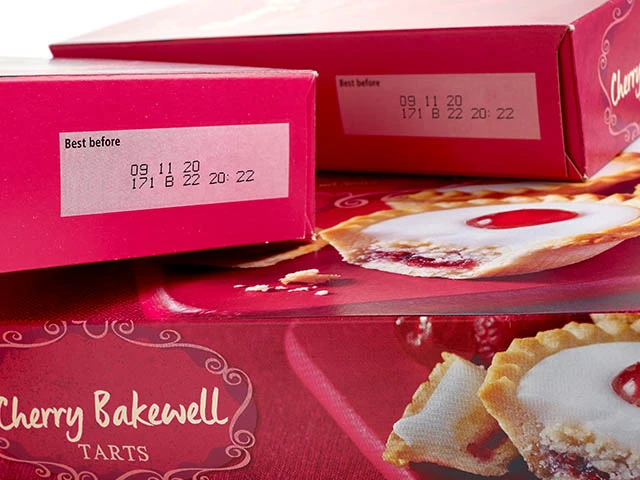
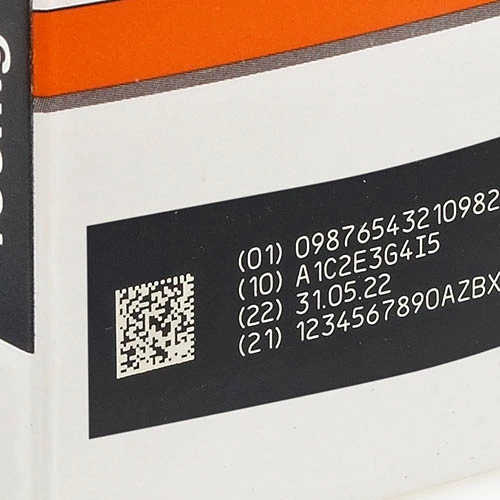
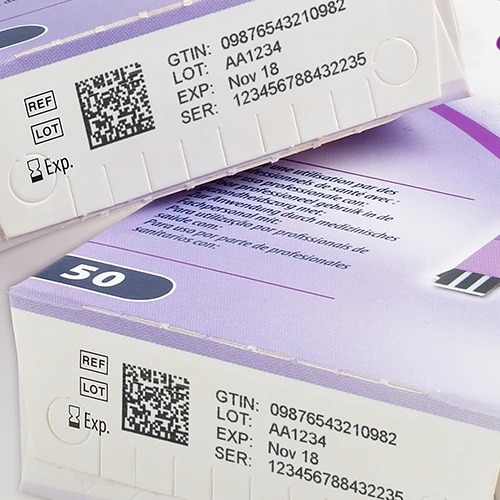
Traditional individual packaging, often printed with expiration dates, lot numbers, or traceability codes. Widely used, particularly in the food, cosmetics, and pharmaceutical industries.
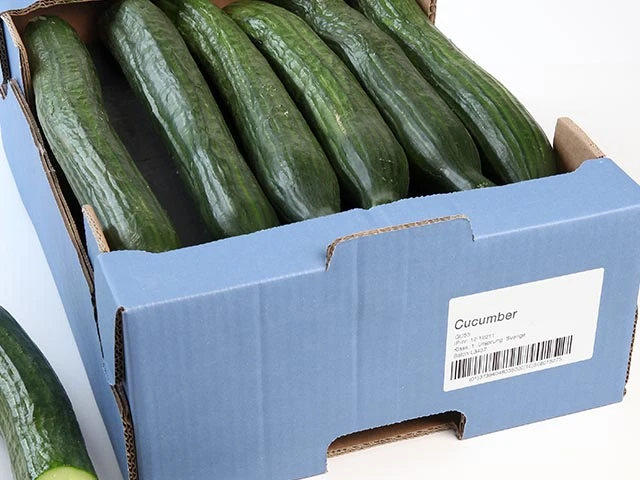
Collective Packaging / Trays
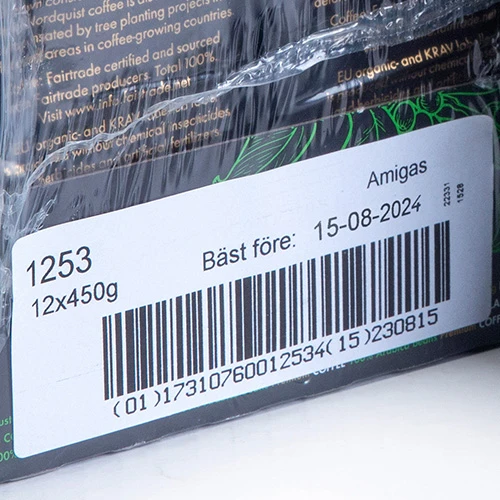
Secondary packaging that bundles multiple individual products, often as a display unit in retail stores or for transport on pallets. Labeling is usually done using plain text or barcodes.
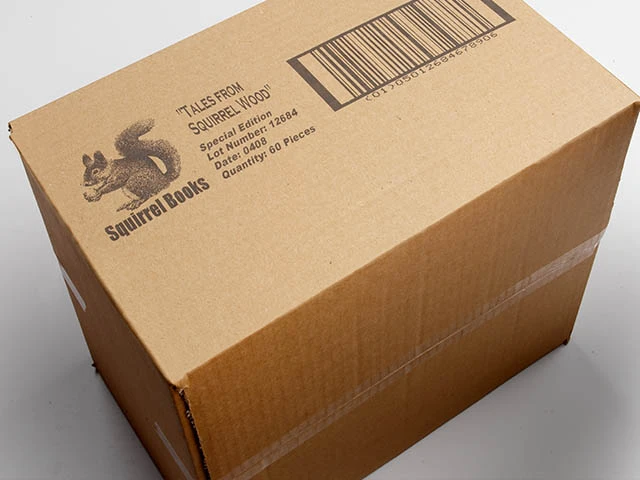
Shipping boxes
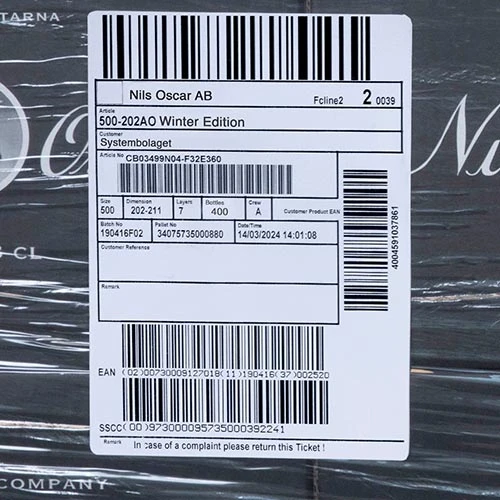
Sturdy corrugated cardboard packaging for storage, shipping, and logistics. It requires large, clearly legible codes or labels to manage material flows.
Challenges
Cardboard is a versatile but technically challenging packaging material. Depending on the surface, packaging level, and production environment, different requirements apply to print quality, legibility, and process integration.
Surface Finish
Depending on the application, cardboard can be absorbent, coated, varnished, or textured. Choosing the right technology and ink is crucial for a sharp, durable print without fraying or smudging.
Dust & Production Environment
During packaging and storage, friction, cutting processes, or the material itself often generate dust. This can impair printheads or affect ink adhesion, especially at high cycle rates.
Layer & Print Position
Whether it’s a folding box, a tray, or a shipping carton: each level comes with its own set of requirements. Sometimes you need small text in a confined space; other times, large-scale logistics codes or side labeling on corrugated cardboard. The technology must be flexible enough to be easily integrated.
Would you like to request a free test print on your product?
Request a test printAppropriate Technologies
There are various methods available for marking cardboard packaging, ranging from high-resolution inkjet printing to laser systems and automated labeling. The optimal solution depends on the material, the packaging process, and the requirements for readability, durability, and line speed.
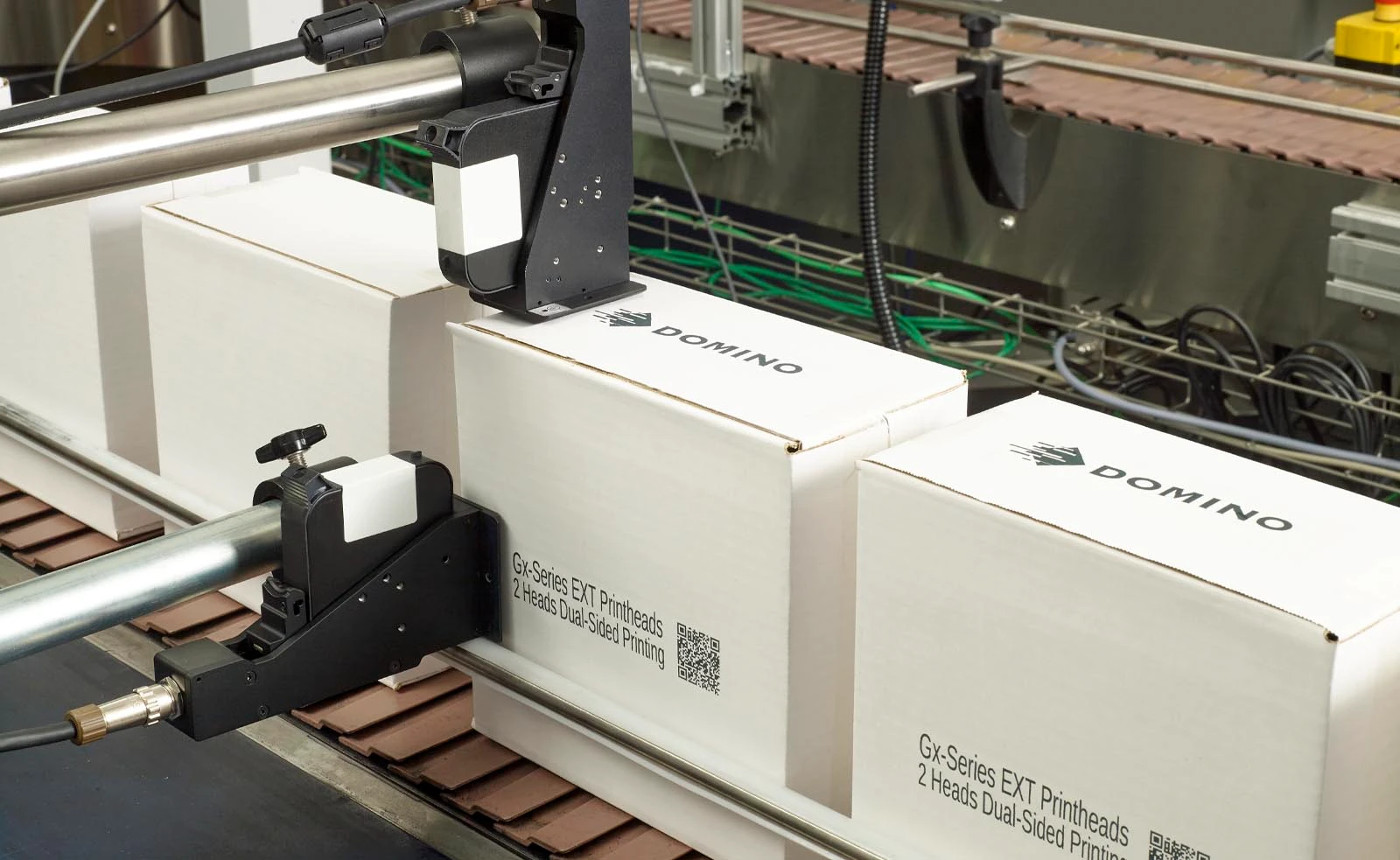
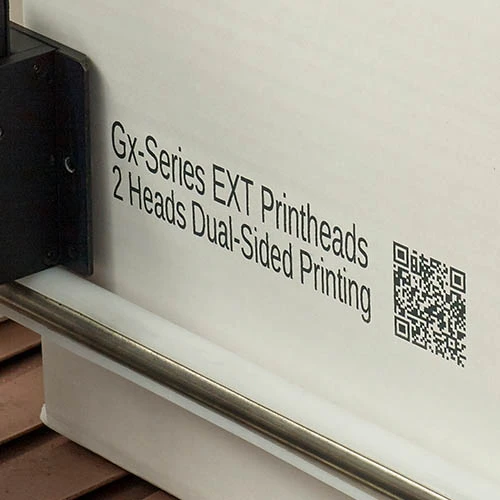
Thermal Inkjet (TIJ)
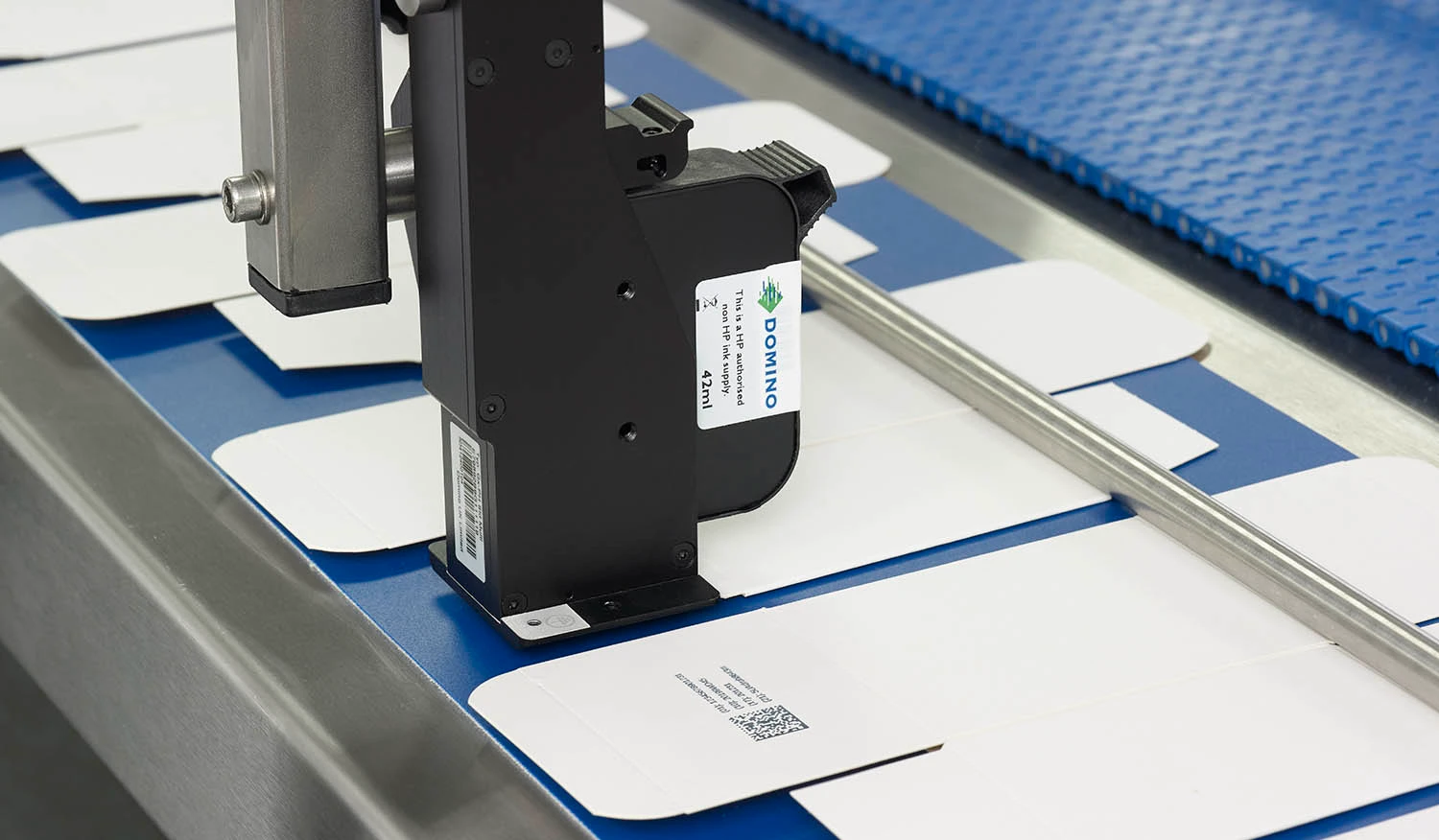
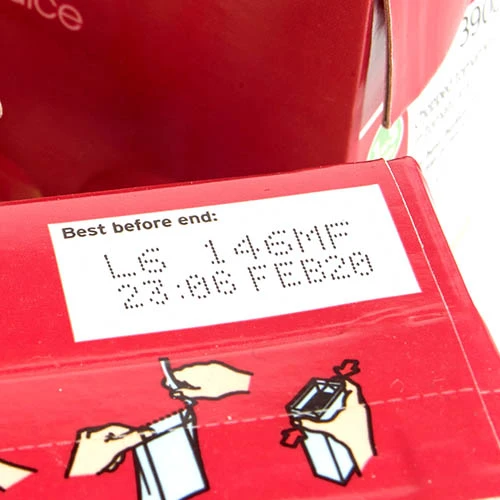
TIJ printers produce high-resolution text, barcodes, or DataMatrix codes on smooth and coated surfaces. They are ideal for folding cartons and smaller formats.
Particularly suitable for: Precise coding on folding cartons, variable data such as batch numbers or expiration dates, and industries with high standards for readability and cleanliness (e.g., pharmaceuticals, cosmetics).
Learn More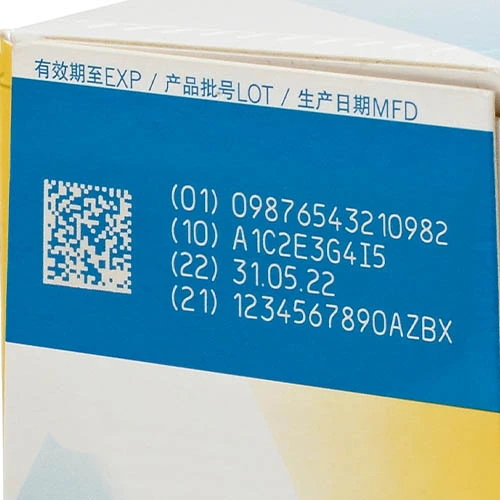
Laser
Lasers create permanently readable codes by removing material or changing the color, without the need for ink or labels. Depending on the type of cardboard, CO2 or fiber lasers are used.
Particularly suitable for: folding cartons with coated or varnished surfaces, applications with high line speeds, and for tamper-proof and consumable-free marking.
Learn More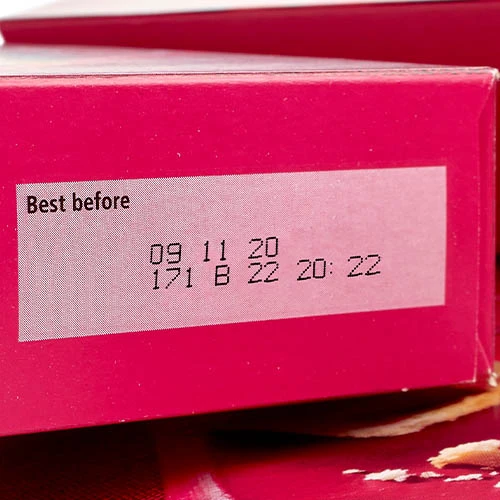
Continuous Inkjet (CIJ)
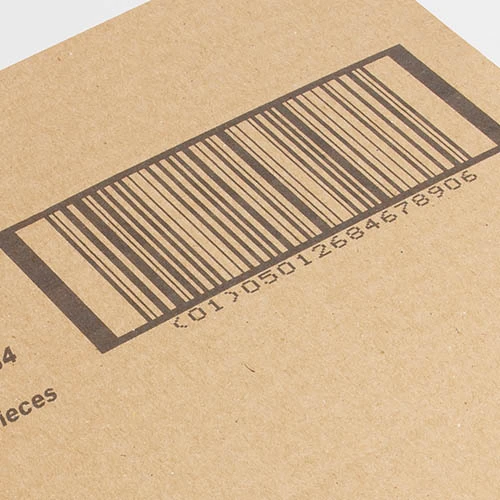
CIJ systems are versatile and perform well even on uneven or porous cardboard surfaces, especially when speed is of the essence.
Particularly suitable for: Simple coding on trays or shipping cartons, high-speed production lines, and applications requiring high ink consumption and a robust setup.
Learn More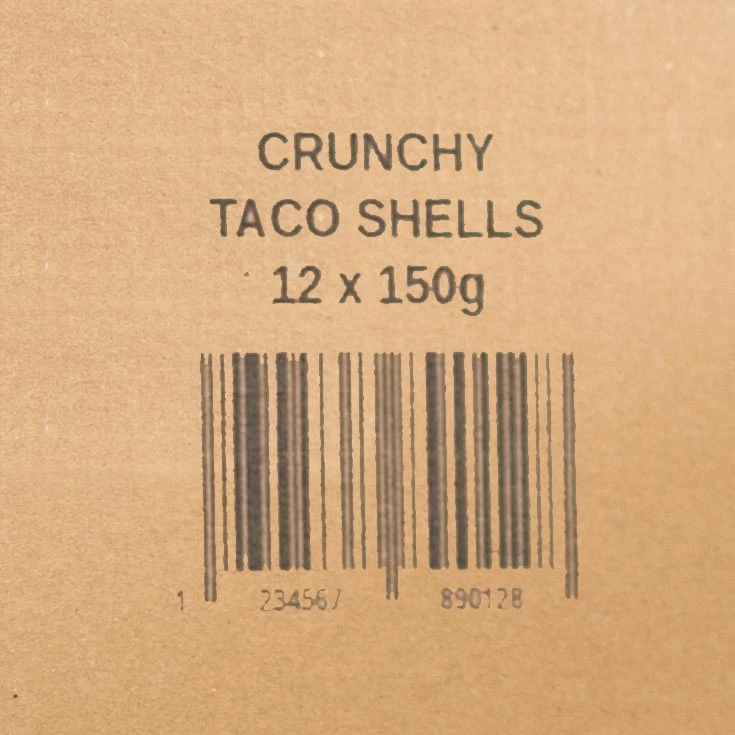
Drop-on-Demand Large-Character Printing
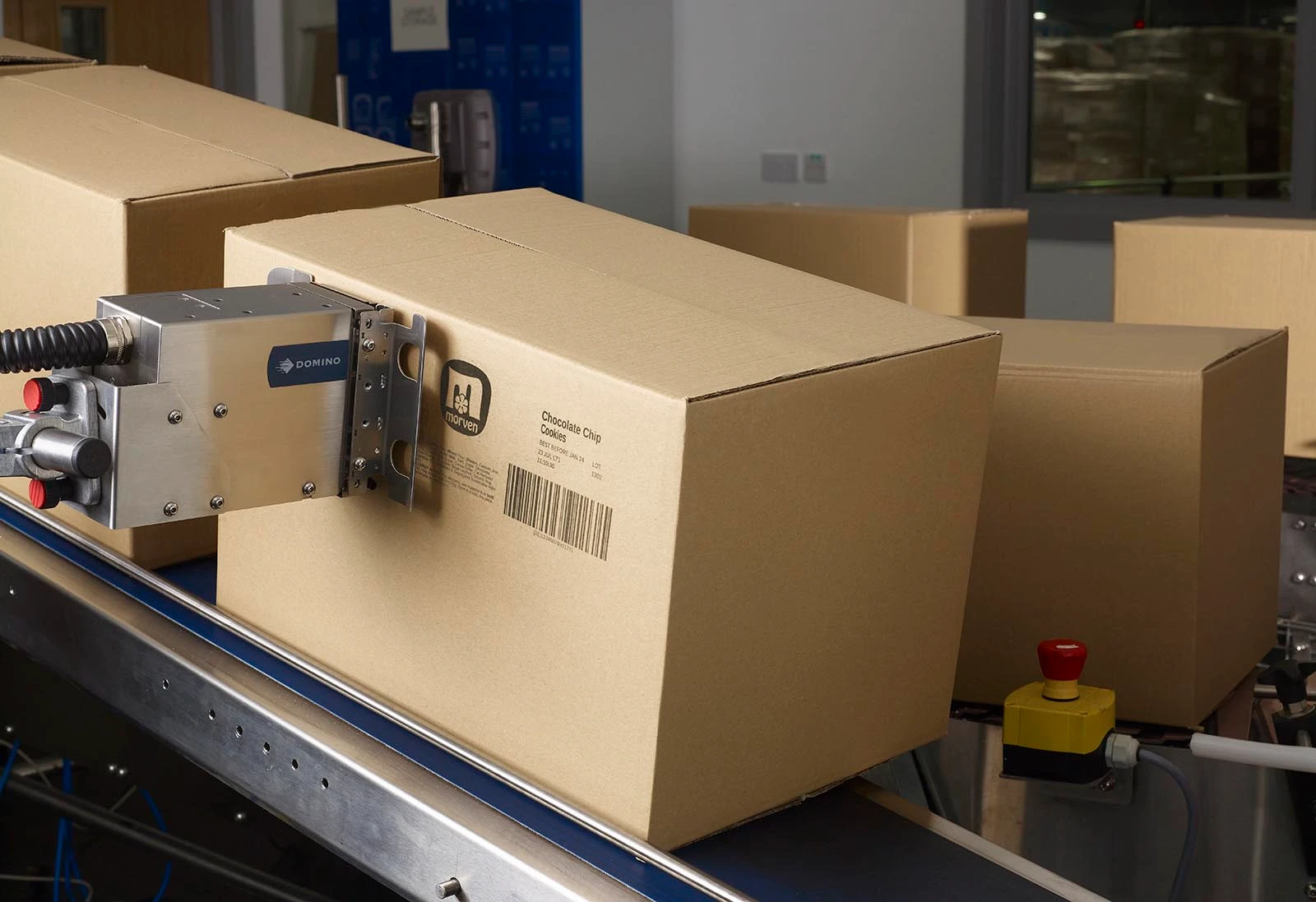
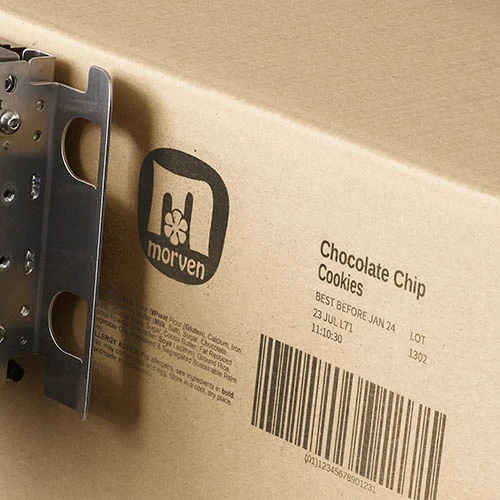
These inkjet printers are designed specifically for large, high-contrast markings, such as those on corrugated shipping boxes.
Particularly suitable for: shipping cartons and outer packaging, clearly legible logistics codes, text, or symbols, as well as for variable carton sizes and large print areas.
Learn More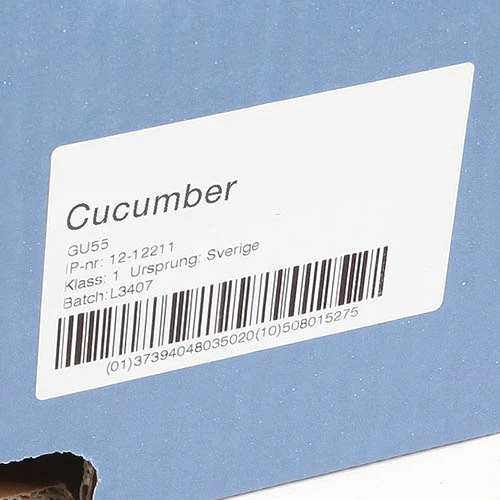
Labeling Machine / Print & Apply
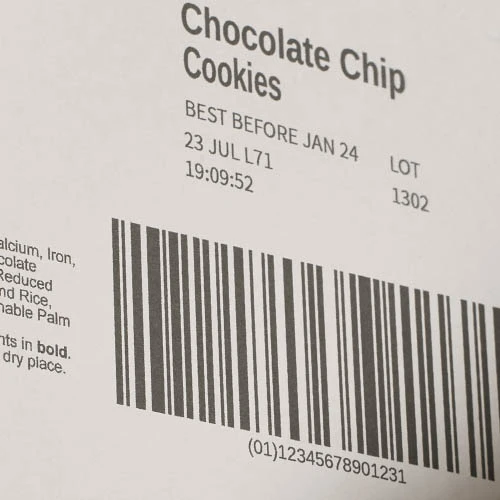
Automated labeling systems precisely apply printed labels to various cardboard box sizes, for example, for logistics or traceability purposes.
Particularly suitable for: bulk packaging and shipping boxes, multi-line information, logos, or variable content, as well as for production lines with different products or flexible layouts.
Learn MoreVideo: Shipping Labeling at Jollyroom
The Nordic online retailer Jollyroom ships thousands of packages every day. To meet the growing demands for speed and traceability, the company relies on an automated labeling solution featuring Domino Print & Apply systems.
"The system is simple to use—it's reliable, requires little maintenance, and saves time."
– Head of Logistics at Jollyroom
Print Samples
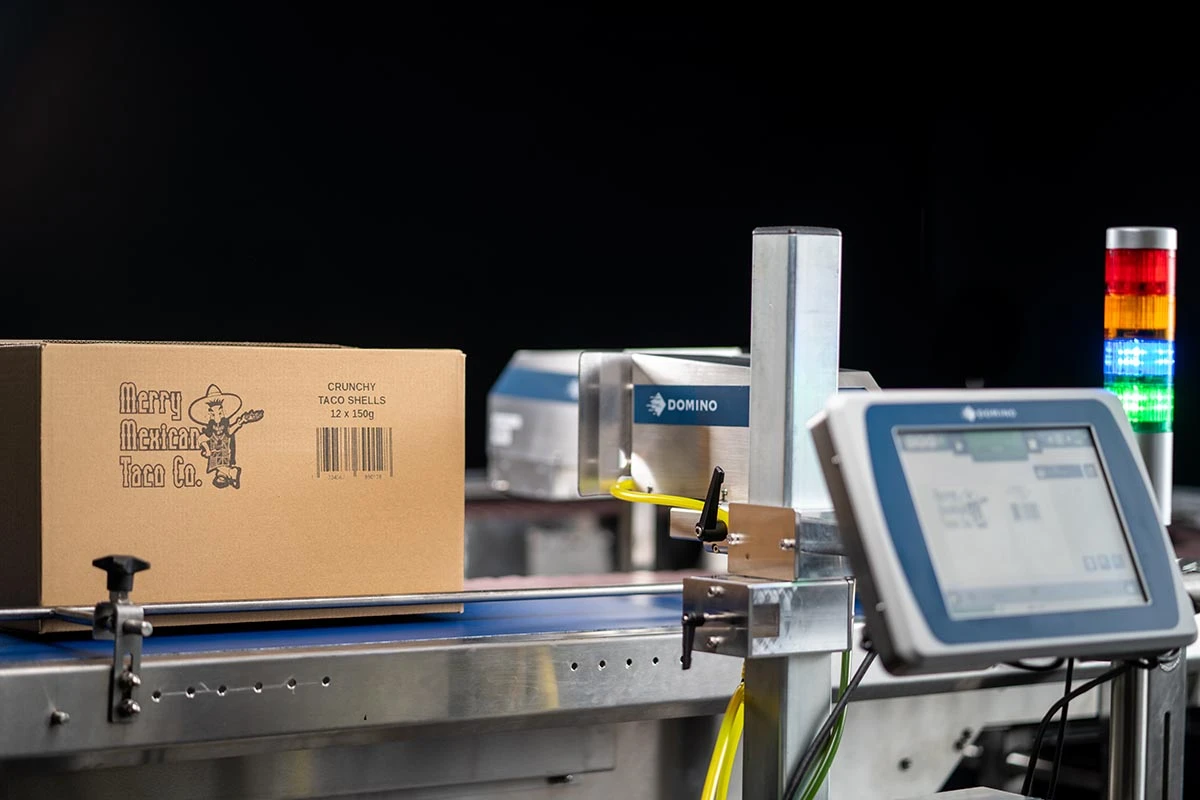
These application examples demonstrate precise coding using ink, laser, and labels on various types of cardboard packaging. Whether it’s fine text on varnished folding boxes, high-contrast barcodes on rough corrugated cardboard, or automated marking during ongoing logistics processes: These examples illustrate the optimal combination of technology and material for a clean, permanently legible result in real-world applications.
We have the right solution for every packaging level and every production environment. We’d be happy to test the labeling free of charge directly on your original material to ensure adhesion and readability under real-world conditions.
Send us your material sample for a free print test on your product.
Problem-Solving
Whether it's PET, HDPE, or other plastics: Together, we'll analyze your production conditions, material properties, and requirements for print quality and durability.
Suggest Technology and Implementation
Based on your application, we’ll show you suitable printing technologies and specific implementation options—tailored to your line speed and product shape.
Check Feasibility
Through practical testing, we validate the quality and adhesion of the labeling and ensure that the solution is compatible with your process.
Support Through Commissioning
From equipment selection to training—our team supports you with technical expertise and reliable support

Contact Us