
Labeling Plastic Packaging
Variable coding on flexible packaging—reliable, high-contrast, and process-reliable
Flexible film packaging is now standard in the food, pharmaceutical, and consumer goods industries. Whether it’s flow packs, pouches, stick packs, or sachets—best-by dates, lot numbers, barcodes, or UDI codes must be printed on them with precision and legibility.
For reliable marking on films, it’s not just print quality that matters, but also adhesion to smooth surfaces, drying time, contrast, and resistance to abrasion, heat, and packaging processes. In this article, we’ll show you which technologies ensure successful industrial marking on films.
Contact UsWhy is labeling film packaging important?
Ensuring Traceability:Batch or time codes on film packaging enable seamless traceability—even with high cycle times or automated packaging lines. This ensures compliance with regulatory requirements and quality assurance.
Product Safety & Information:Expiration dates, production times, or other variable information must be clearly legible and durable even on glossy, flexible, or thermoformed surfaces—even in the presence of moisture, heat, or static electricity.
Protecting Brand Integrity:Clear, tamper-proof codes strengthen trust in the brand—especially for promotional packaging, export products, or applications with a high risk of tampering.
Challenges in Labeling Film Packaging
Film packaging poses unique challenges for coding. The combination of material properties, processing steps, and production speed calls for well-thought-out solutions:
Difficult Surfaces
Many films are smooth, glossy, or have a special coating—which makes it difficult for ink to adhere or for laser markings to be legible.
Deformation During the Process
During sealing, cutting, or thermoforming, the surface may become distorted—markings must remain clearly legible even after the packaging process.
High speed
Packaging lines operate at high cycle rates. Labeling must remain precise and reliable—even when formats change.
Static
Charge
Plastic films tend to accumulate static electricity. This can affect ink distribution or impair coding quality.
Would you like to request a free test print on your product?
Request a test printAppropriate Technologies
Depending on the application, various technologies are used for labelingfilm packaging—includingthermal transfer printing (TTO),laser, andcontinuous inkjet (CIJ). The most suitable solution depends, among other factors, on thetype of film, thepackaging process, and the requirements forreadability,durability, andproduction speed.
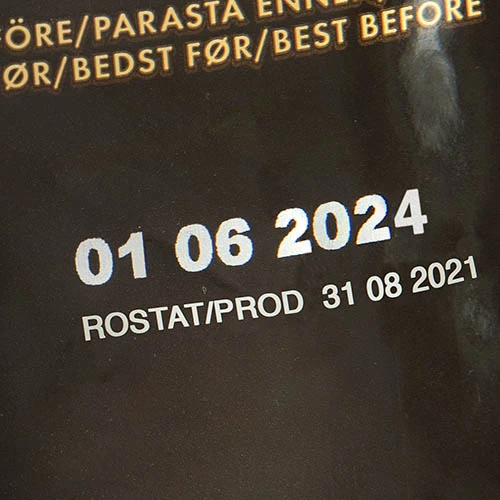
Thermal Transfer Printing (TTO)
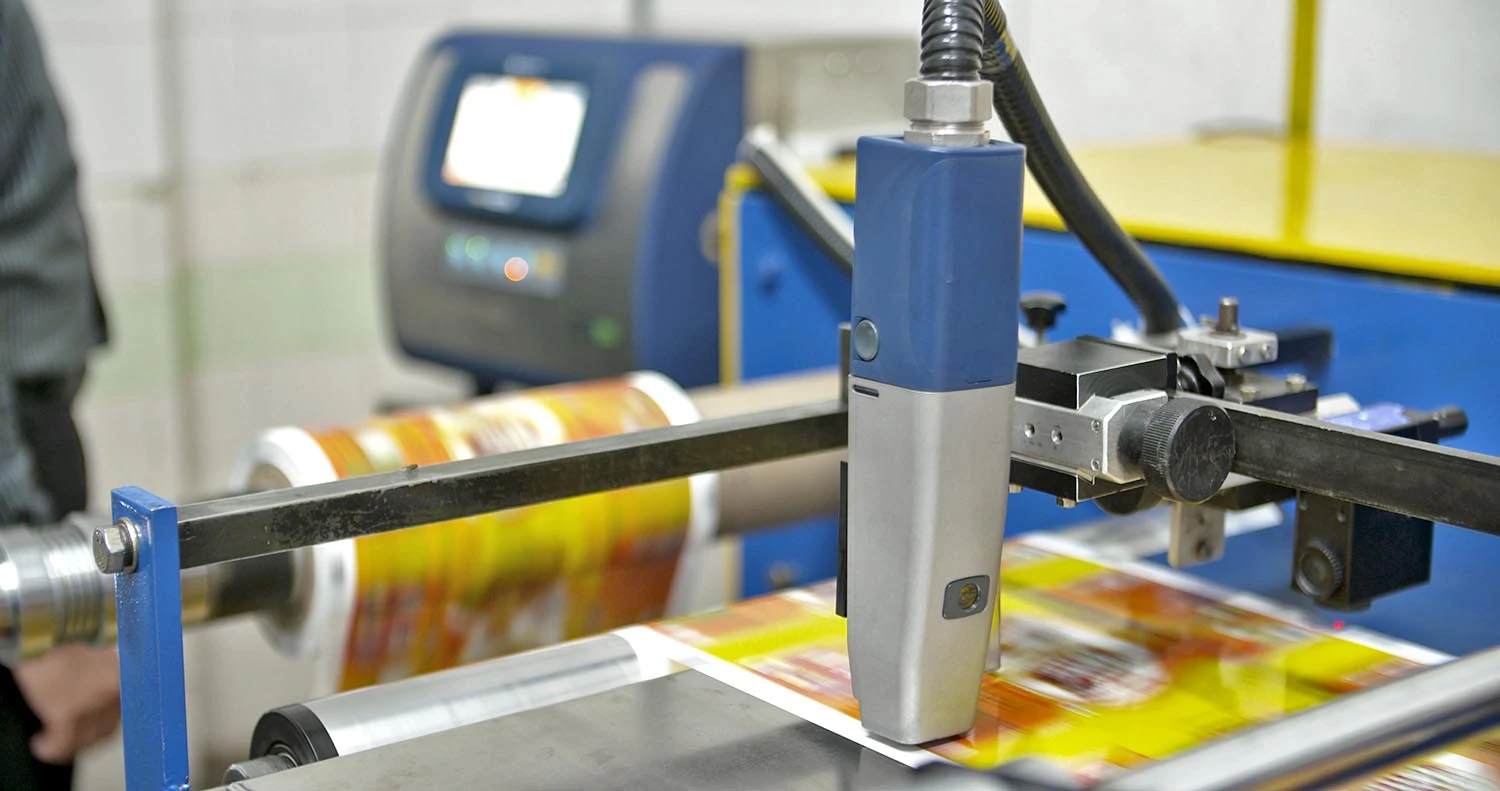
TTO printers apply high-resolution codes directly to flexible packaging films—contactlessly and with high precision. Particularly suitable for:
- intermittent or continuous packaging processes (FFS machines)
- crystal-clear text, barcodes, or graphics
- Variable data at high cycle rates
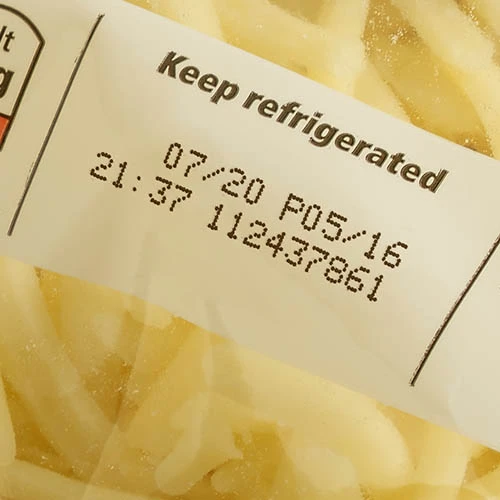
Continuous Inkjet (CIJ)
CIJ printers with specially formulated inks enable flexible and reliable marking on a wide variety of film types. Particularly suitable for:
- Flexible adaptation to different packaging materials
- Quick-drying inks, even on surfaces treated with lubricants
- Markings on High-Speed Lines
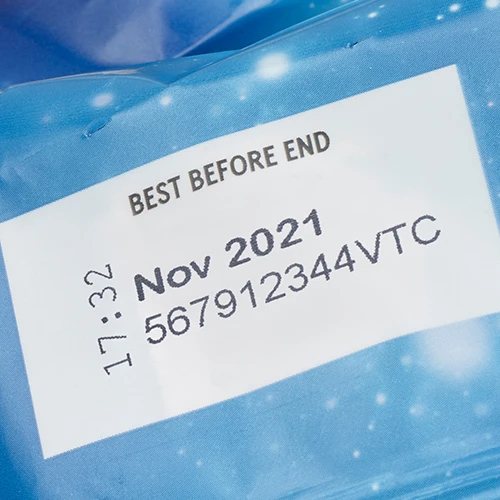
Thermal Inkjet (TIJ)
TIJ systems offer a compact solution for simple coding tasks on films. Ideal for situations with limited space and clear printing requirements. Particularly suitable for:
- small barcodes, Data Matrix codes, or plain text
- Packaging lines with low to medium throughput
- solvent-free applications
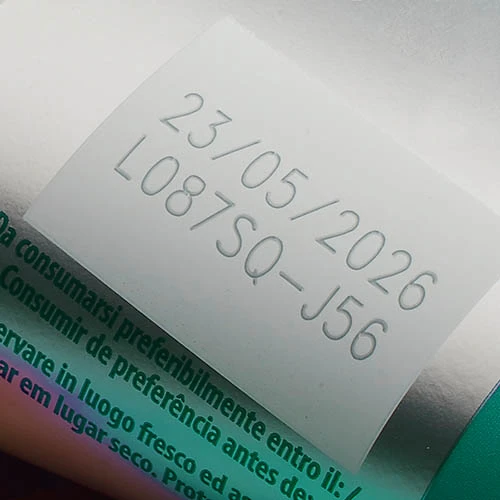
Laser
Lasers mark film packaging without physical contact—either byremoving material(e.g., on coated or painted films) or througha light-induced reactionon the surface (e.g., on monofilms). Particularly suitable for:
- Permanent,abrasion-resistant markingswithout ink
- high line speeds
- Applications involvingrecyclable materialsorhigh hygiene requirements
Print Samples
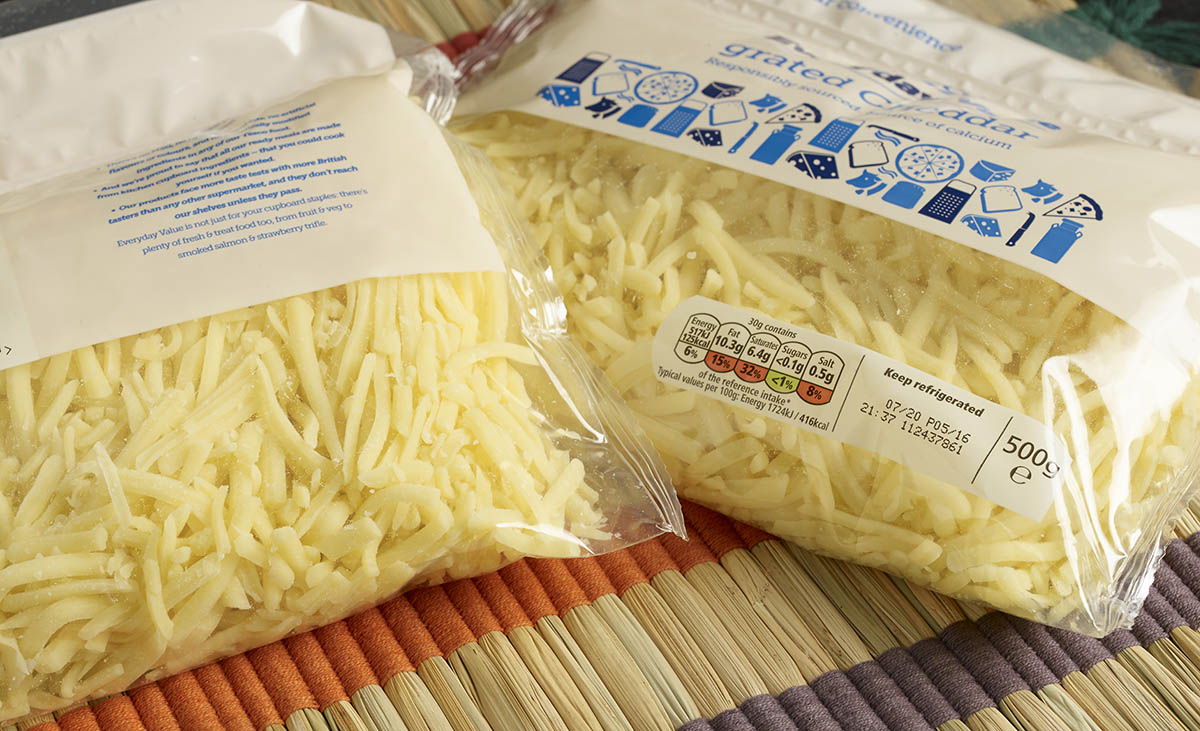
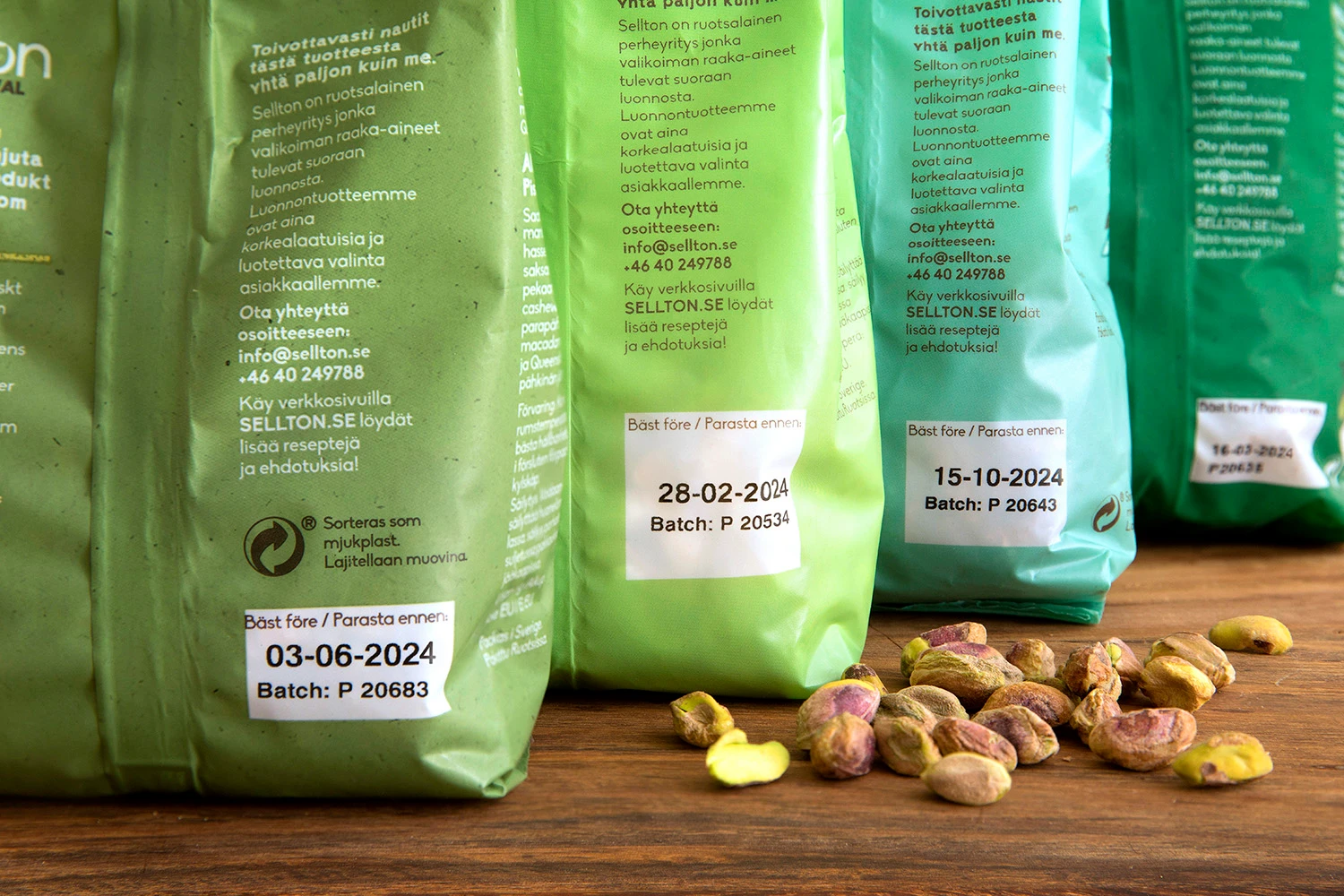
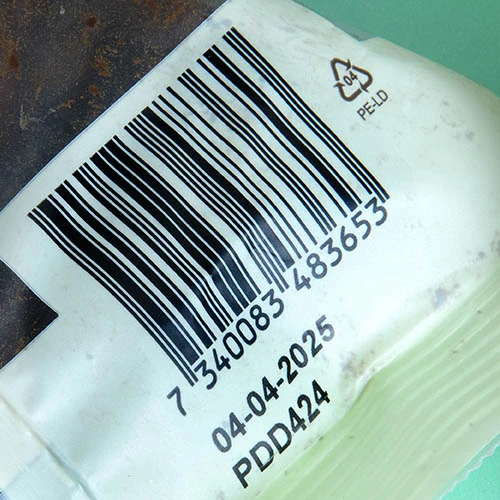
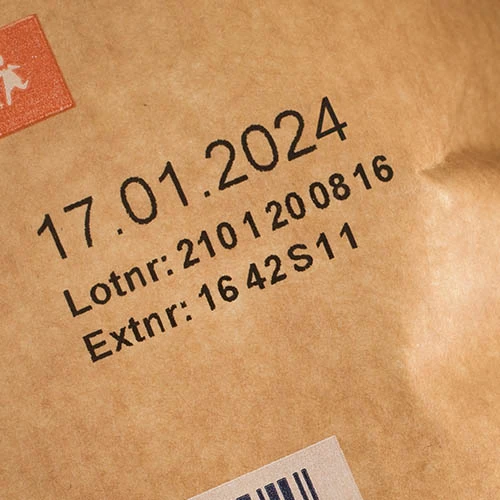
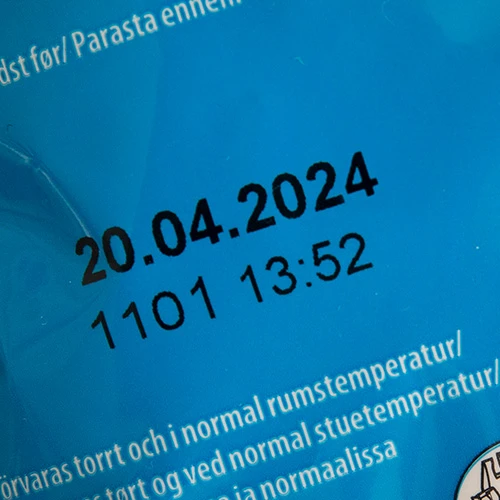
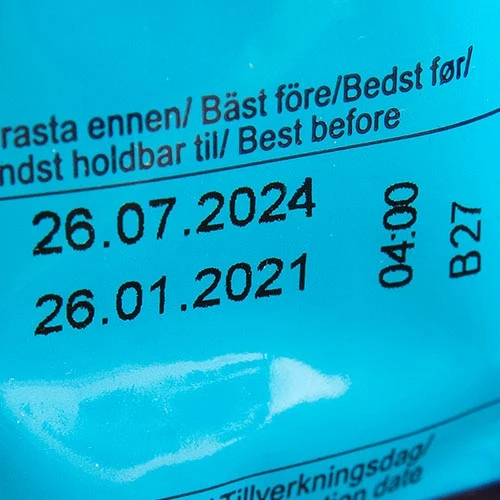
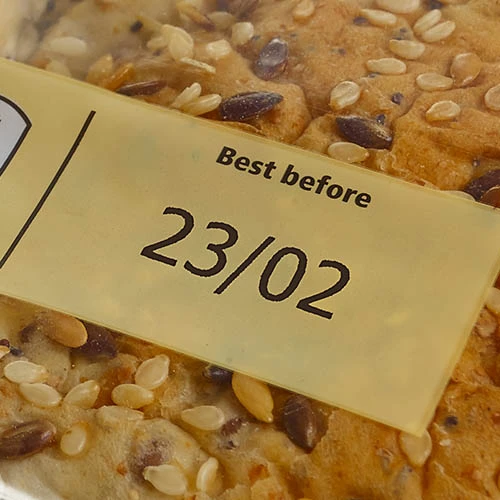
Our application photos clearly demonstrate how precise and high-contrast coding can be achieved on flexible films. They show razor-sharp best-by dates on smooth flow packs, smudge-resistant barcodes on stretchable tubular pouch film, and high-resolution DataMatrix codes on transparent sachets. These examples illustrate how ink, thermal transfer ribbon, or laser are optimally matched to the respective film structure.
Each film material reacts differently to heat, ink, or laser radiation. We would be happy to test the optimal marking technique on your own film samples at no charge to ensure adhesion, abrasion resistance, and legibility under your actual production conditions.
Send us your material sample for a free print test on your product.
Problem-Solving
You describe your application to us—we’ll determine the appropriate materials, such as monolayer films, multilayer films, or coated substrates, as well as the production environment, packaging process (e.g., FFS), and requirements for code readability, durability, and positioning.
Suggest Technologies and Solutions
Based on your specific situation, we’ll show you suitable technologies and implementation options—such as thermal transfer printing, CIJ, or laser solutions—for reliable and process-secure marking on film packaging.
Feasibility Testing
In realistic tests, we evaluate the legibility, durability, and material compatibility of the markings—tailored to your packaging line and the specific requirements of your film materials.
Integration and Support
We assist you with selection, integration, and commissioning—with experienced technical support and comprehensive expertise in the labeling of flexible packaging.

Contact Us