

Label lids and closures
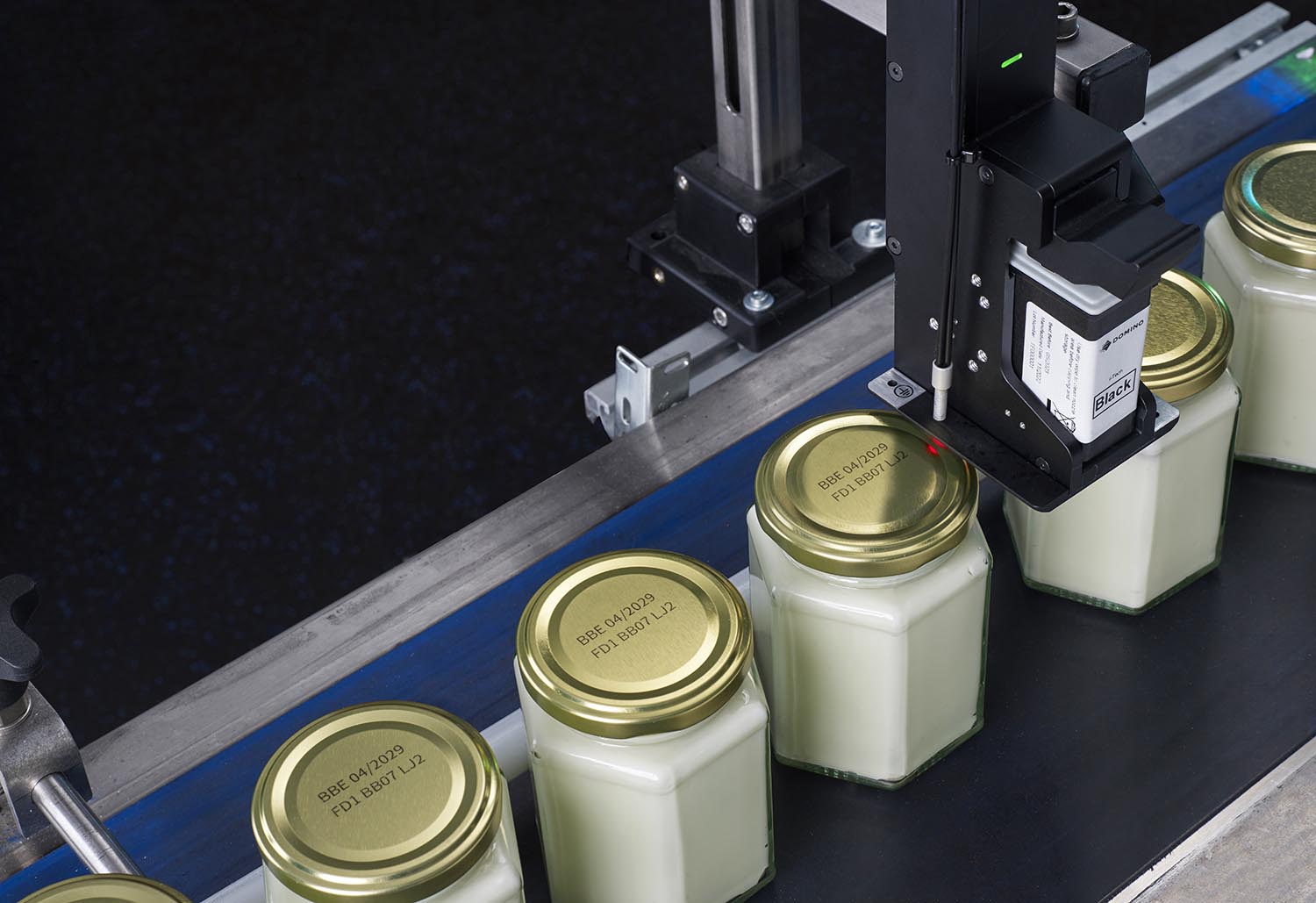
Secure coding on plastic and metal closures: High-contrast, durable, and suitable for production lines.
The marking of lids and closures usually takes place in confined spaces and at high line speeds. A fast-drying, abrasion-resistant marking is particularly important for plastic caps, snap-on lids, and screw caps. Precise print images are essential—ones that adhere reliably even to curved or textured surfaces and remain legible over time.
At the same time, printing systems must be able to integrate seamlessly and continuously into existing production lines, even when dealing with varying shapes, materials, and orientation formats. Whether it’s expiration dates, lot numbers, or 2D codes, the right technology ensures maximum OEE and complete traceability in manufacturing.
Contact UsWhen Glass Labeling Is Crucial
Ensuring traceability: Production data such as batch number, filling date, or expiration date are printed directly on the lid, where they are clearly visible and permanently attached to the product.
Readability at the Point of Sale: Especially for beverages and packaged foods, the labeling on the lid is often the only clearly visible code for retailers and consumers.
Complying with Legal Requirements: In industries such as food, beverage, and pharmaceuticals, tamper-proof and permanent labeling is required by law.
Challenges
The properties of glass as a material require precise adaptation of the printing technique:
Limited space on the surface
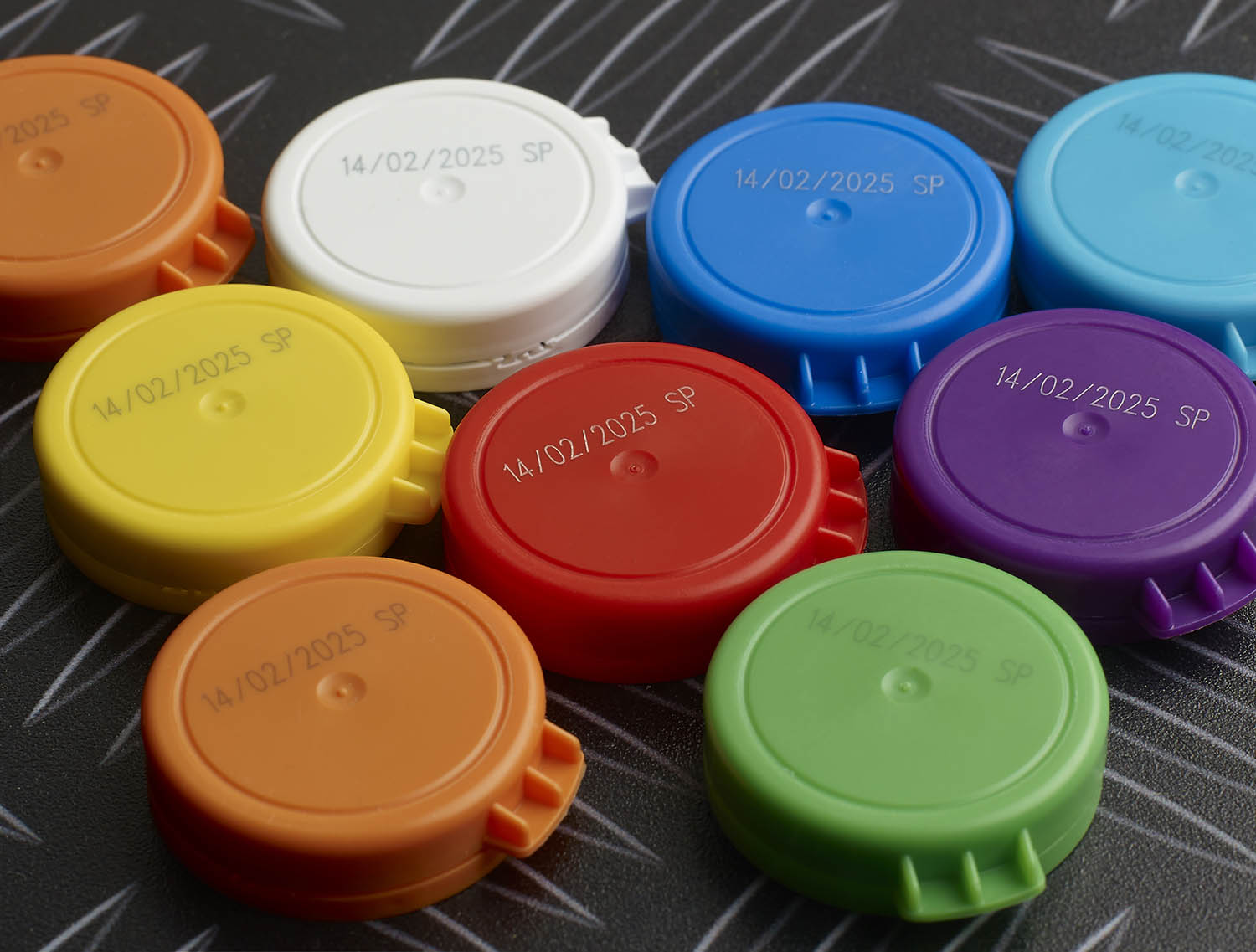
Lids often provide only a few square centimeters of space for printed content, which is why the coding must be extremely compact yet razor-sharp.
Irregular or curved shapes
Many closures are textured, ribbed, or domed, so the printing technology must reliably handle varying spacing and complex geometries.
Short cycle times and high line speeds
On high-speed production lines, only a fraction of a second is available for the printing process, which is why the ink must dry instantly and the signals must be precisely synchronized.
Would you like to request a free test print on your product?
Go to the Sample Print ServiceAppropriate Technologies
For marking lids and closures—such as those made of PE, PP, or metal—there are various printing and laser methods to choose from. The optimal technology depends on your material, the surface shape, and the line speed.
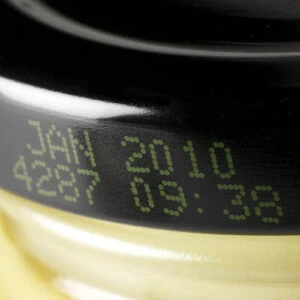
Continuous Inkjet (CIJ)
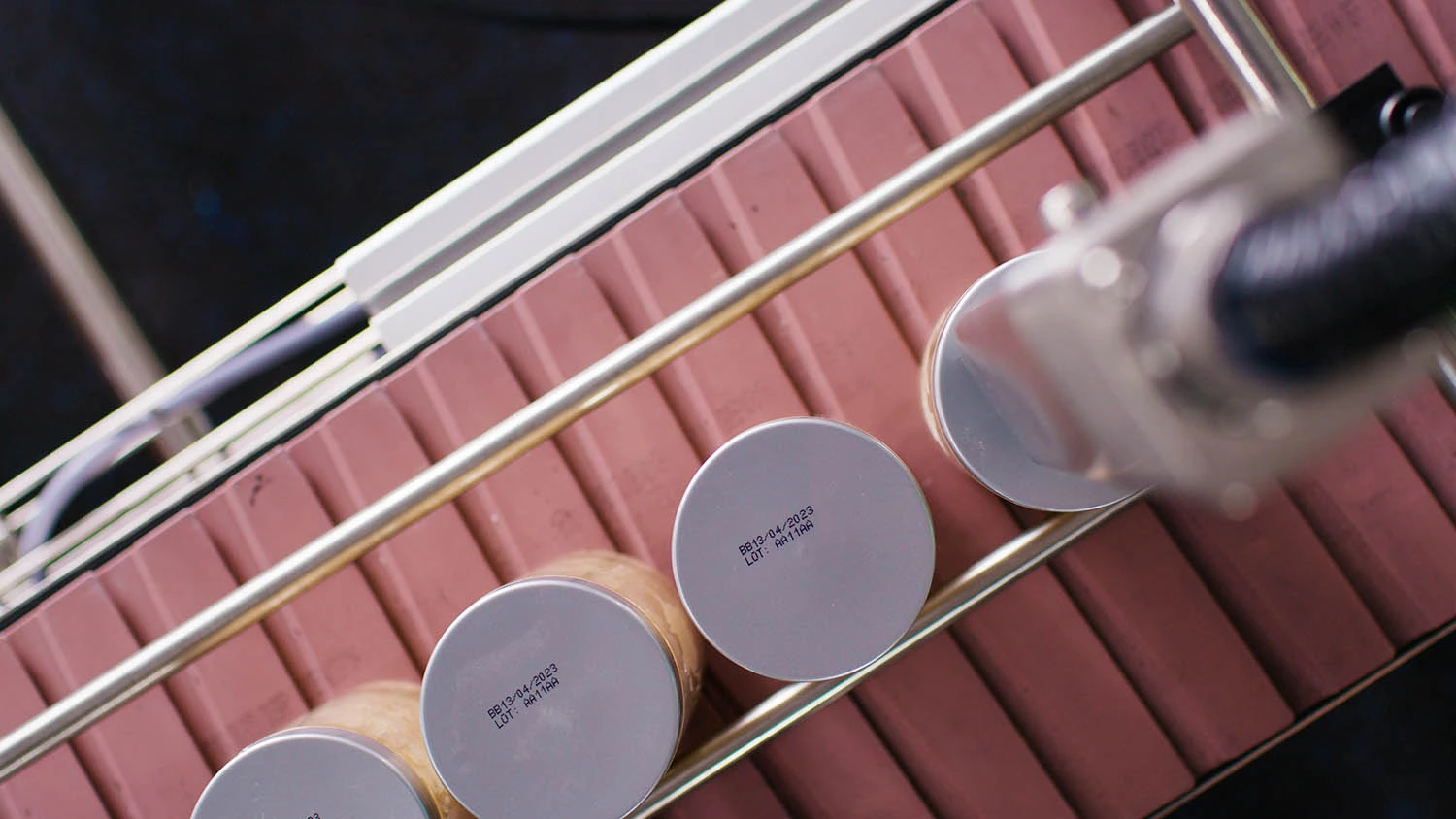
CIJ printers are the top choice for high-throughput closures. They use fast-drying inks, adhere securely to plastics, and produce crisp codes even on round or textured surfaces.
Typical applications: Batch numbers, best-by dates, and production data on round plastic or metal lids at high line speeds.
Advantages: Contactless printing at a great distance from the product and excellent adhesion to PE, PP, and painted metal.
Learn More
Laser Marking
Laser systems mark permanently without using any consumables. When used on suitable lid materials or modified plastics, they create a razor-sharp, abrasion-resistant contrast directly within the surface structure.
Typical applications: Forgery-proof decoding and engraving on dark-colored or laser-active caps.
Advantages: No ink drying required, low maintenance, and completely resistant to abrasion and chemicals.
Learn More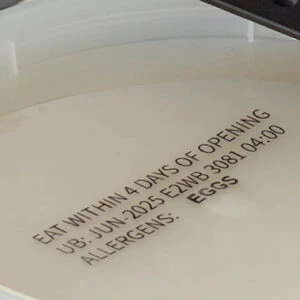
Thermal Inkjet (TIJ)
TIJ systems excel when used with flat or precisely guided lids, offering outstanding print resolution and extremely easy handling without complex maintenance.
Typical applications: High-resolution 2D codes, logos, and fine text on flat snap-on lids or cardboard closures.
Advantages: Maximum print quality with minimal maintenance and quick cartridge changes when switching formats.
Learn More
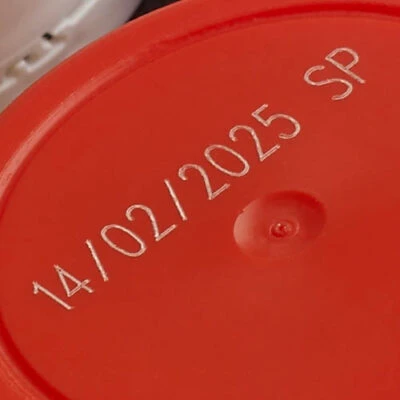
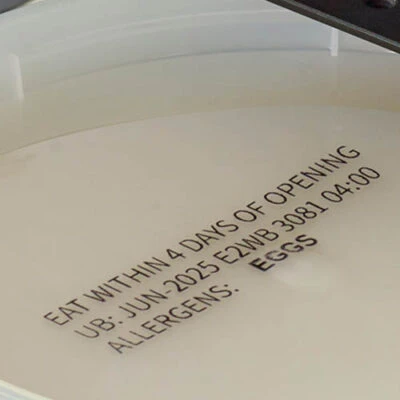
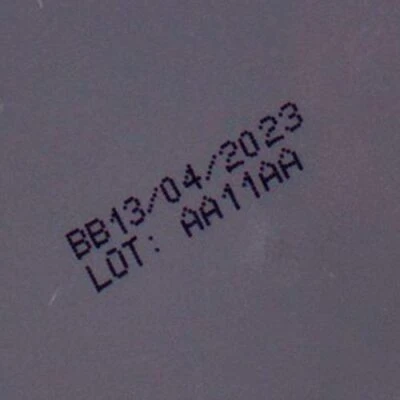
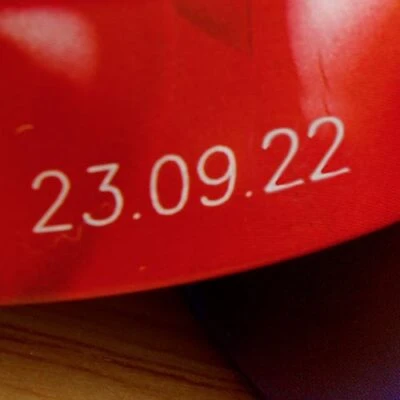
Print Samples
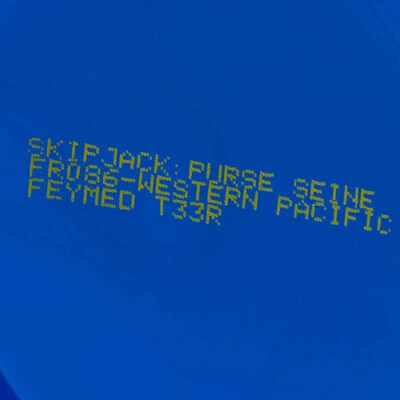
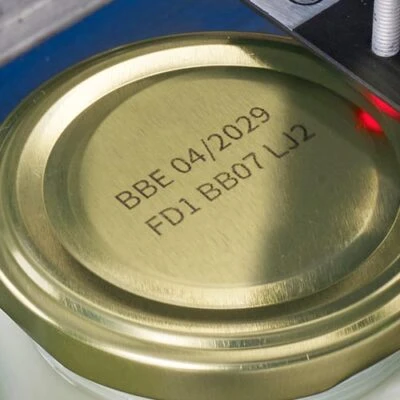
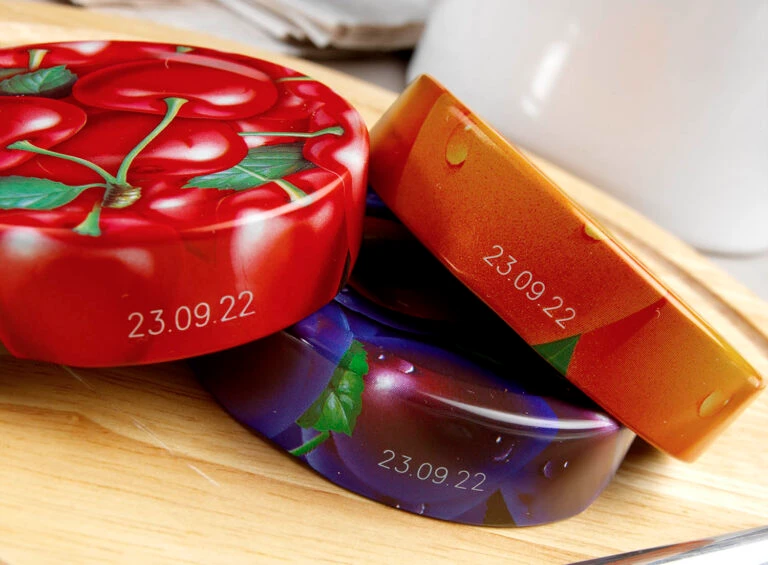
In everyday practice, the varying requirements for caps become apparent in the details. On rough PE beverage caps, continuous inkjet printing ensures legible expiration dates even when subjected to vibrations, while on smooth aluminum screw caps, special inks guarantee immediate smudge resistance. Even intricate Data Matrix codes on pharmaceutical snap-on caps can be applied with razor-sharp clarity and full scanability using thermal inkjet or laser technology. We’d be happy to test your specific caps and closures under real-world conditions. Take advantage of our service for free sample prints on your original materials.
Send us your material sample for a free print test on your product.
Problem-Solving
Understanding the Application: We analyze your line speed, closure geometries, and material properties in detail.
Select Technology: We objectively determine the most suitable printing or laser technology for your specific needs.
Feasibility Testing: In our application lab, we perform sample markings on your original parts and test adhesion and legibility.
Integration and Support: Our specialists seamlessly integrate the system into your production line and ensure its long-term operation through after-sales service.


Contact Us