
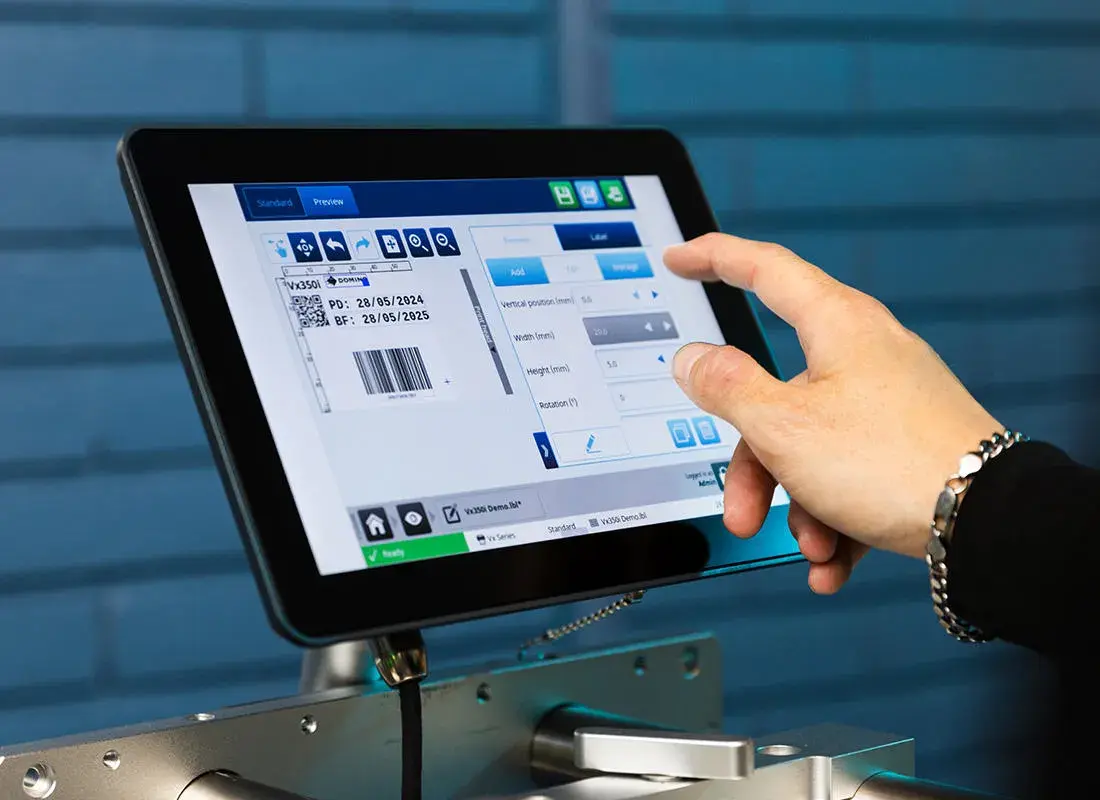
Labeling Blister Packages
Secure coding on blister packaging: Legible, tamper-proof, and production-ready.
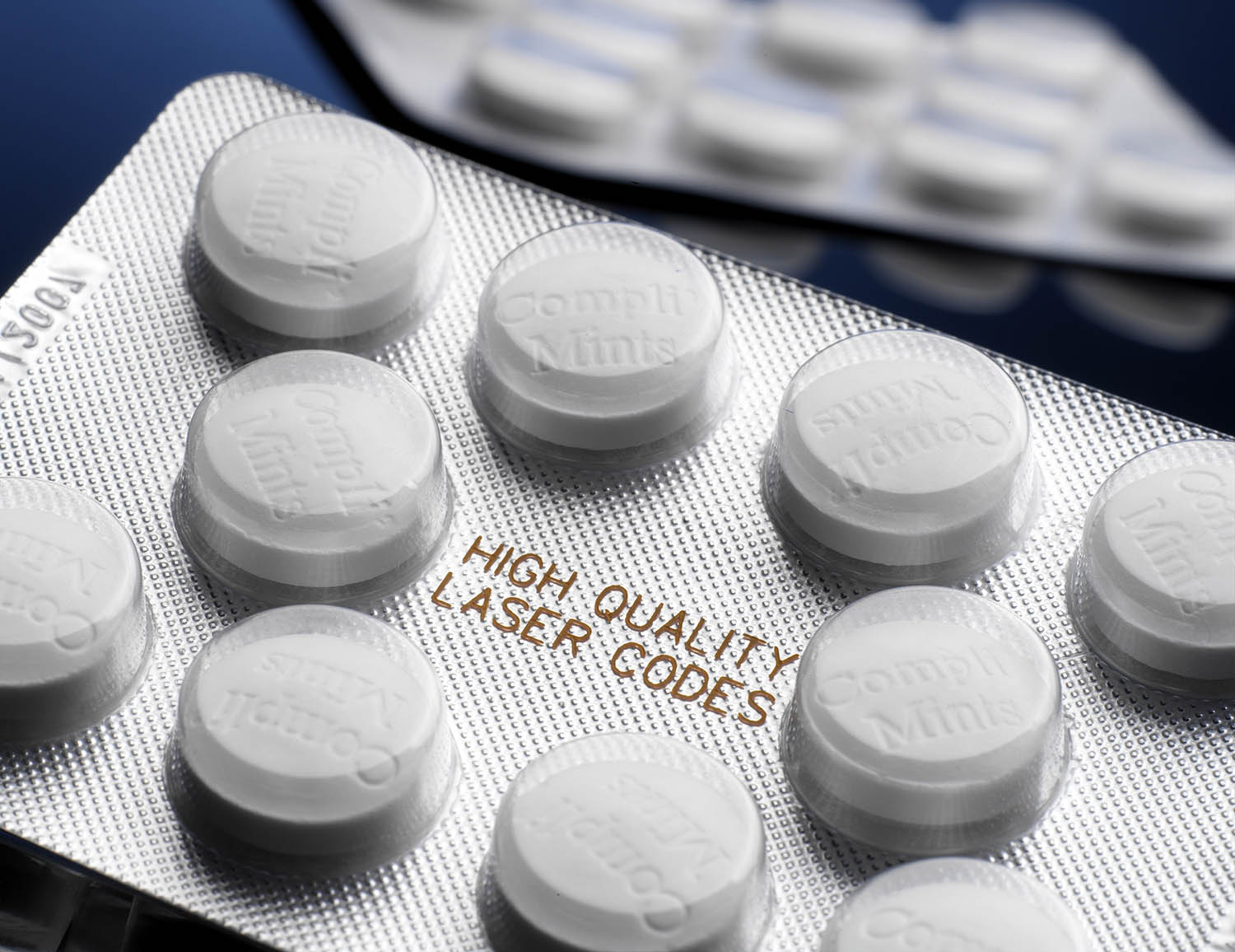
Blister packaging is an indispensable part of the pharmaceutical and medical technology industries. To ensure traceability and product safety, it must be reliably labeled. Clear, durable print images for lot numbers, best-by dates, and serialization data are particularly important.
Depending on the material and production speed, various technologies are used that can be seamlessly integrated into existing lines. Whether pre-printed films are being applied across the entire surface or individual doses are being serialized directly, the right labeling solution ensures compliance with strict regulatory standards—such as the EU Falsified Medicines Directive (FMD)—while maximizing overall equipment effectiveness.
Contact UsWhy Labeling Blister Packaging Is Important
Traceability and Product Safety: In the pharmaceutical and medical technology industries, end-to-end traceability is required by law to ensure that every packaging unit can be traced precisely back to its manufacturing batch.
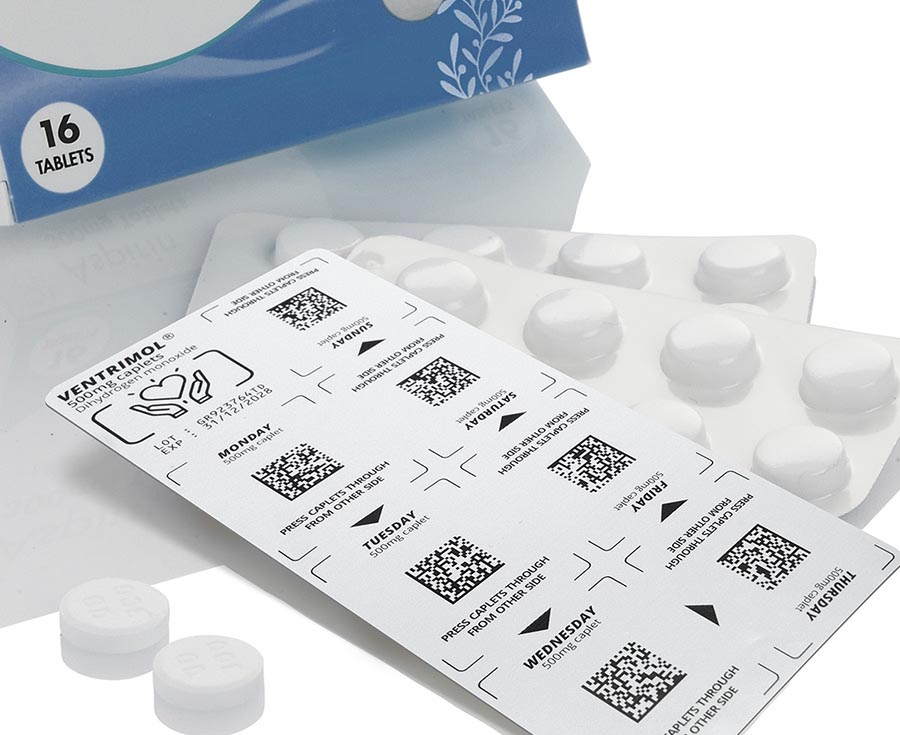
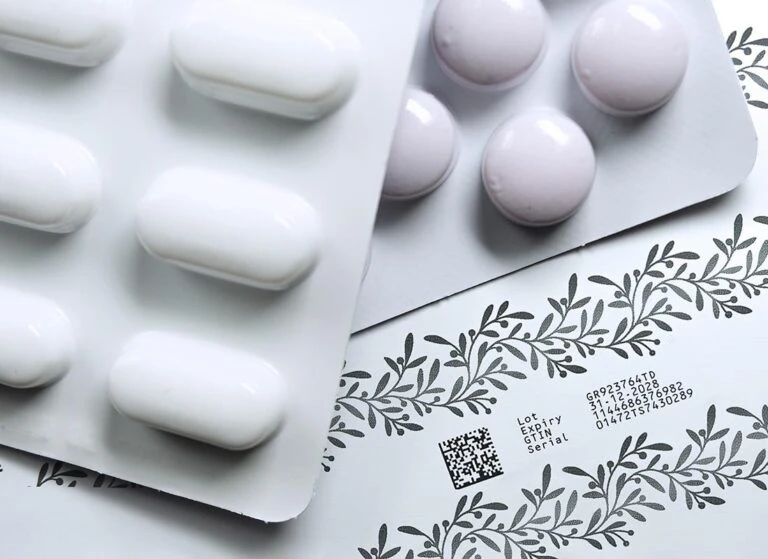
Counterfeit Protection in the Market: Thanks to unique serial numbers and machine-readable 2D Data Matrix codes, each blister package is uniquely identifiable and protected against counterfeiting.
Efficient Logistics and Warehousing: Crystal-clear labeling facilitates automated data capture in logistics processes and ensures a smooth flow of goods throughout the entire supply chain.
Challenges
Labeling blister packs places high demands on process stability, print resolution, and substrate adhesion. The combination of sophisticated film materials and regulatory requirements calls for precisely tailored systems.
Production Speeds
Pharmaceutical packaging lines often operate at cycle rates of several hundred units per minute, which is why coding must be performed in perfect synchronization and without delay.
Variety of Materials and Finishes
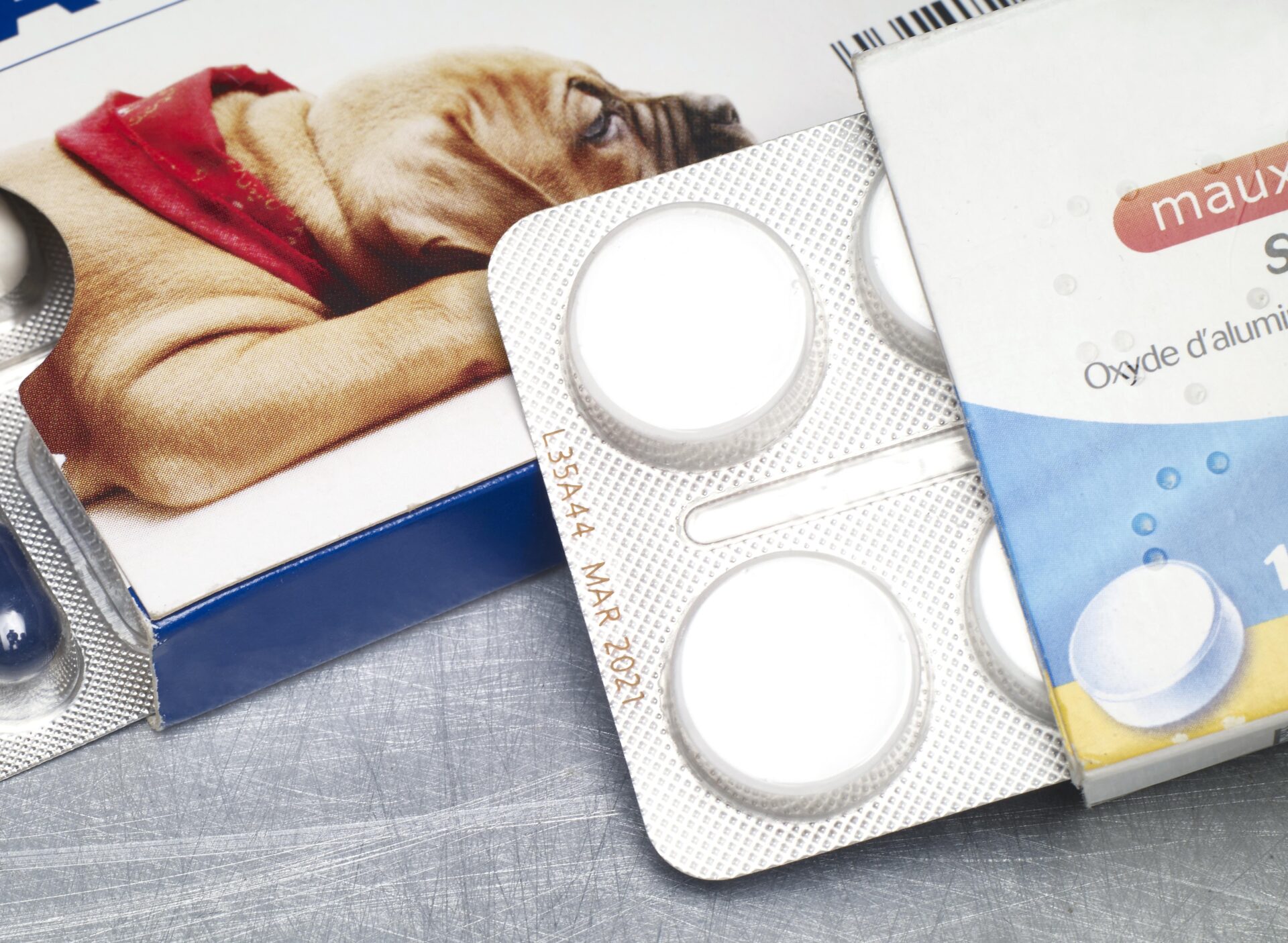
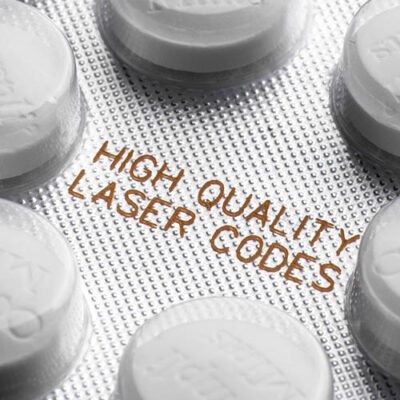
Blister films made of aluminum, PVC, PP, or sealing wax require specially formulated printing media or laser sources to achieve scratch-resistant, high-contrast results.
Counterfeit Protection and Serialization
Serial numbers and codes must be forgery-proof, unalterable, and 100% reliably readable by camera systems (vision inspection).
Would you like to request a free test print on your product?
Request a test printAppropriate Technologies
There are various specialized printing and laser processes available for marking blister packs. The optimal solution depends on the film material, the required resolution, and the level of serialization.
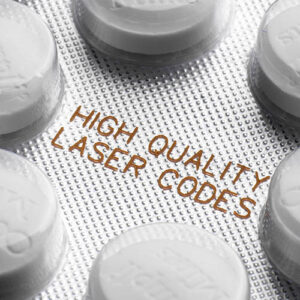
Laser Marking
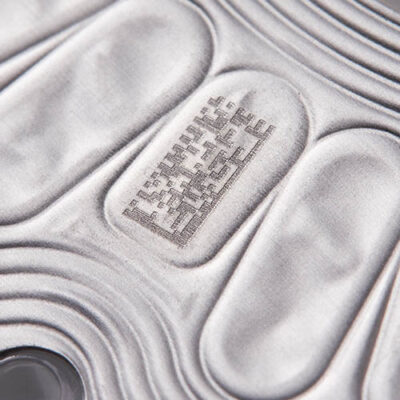
Laser systems provide permanent, completely solvent-free marking on blister packaging films. They require no consumables and are ideal for aluminum and coated films.
- Typical applications: Tamper-proof batch and serialization codes on aluminum cover foils or plastic blister packs.
- Advantages: Permanent abrasion protection, low maintenance, and no consumables such as ink or ribbon.
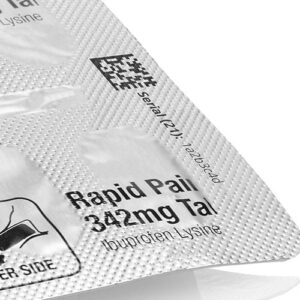
Thermal Transfer Printing (TTO)
Thermal transfer printers are ideal for high-resolution marking on flexible films. They precisely apply variable data in sync with the production cycle to pre-printed or unprinted films.
- Typical applications: Printing best-by dates, lot numbers, and variable text on flexible packaging films prior to the sealing process.
- Advantages: Crystal-clear print quality, high film utilization, and excellent smudge resistance.

Thermal Inkjet (TIJ)
TIJ systems enable high-resolution inkjet printing with minimal maintenance. They are ideal for retroactive coding directly onto the packaging or secondary packaging.
- Typical applications: Applying 2D Data Matrix codes, QR codes, and plain text to pre-printed blister packaging films.
- Advantages: Gentle printing with high resolution (up to 600 dpi) and easy ink cartridge replacement.
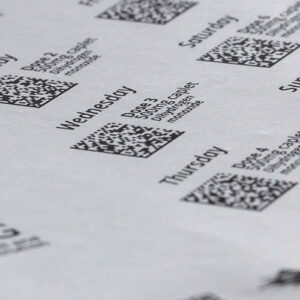
Custom Digital Printing Solution (Domino K600G)
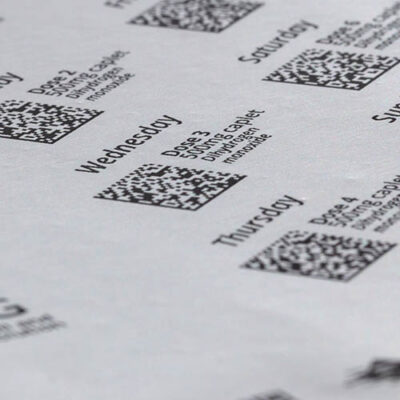
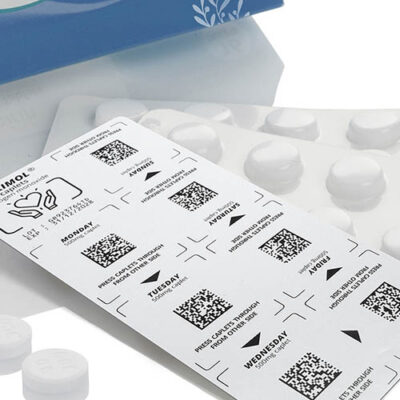
The K600G is a highly specialized digital printing solution for variable late-stage customization directly on the blister compartments at the single-dose level.
- Typical applications: Fully digital printing of variable data and codes directly onto individual blister packs without pre-printing.
- Advantages: Serialization of each individual dose, 600 dpi resolution, and maximum flexibility during batch changes in the middle of the process.
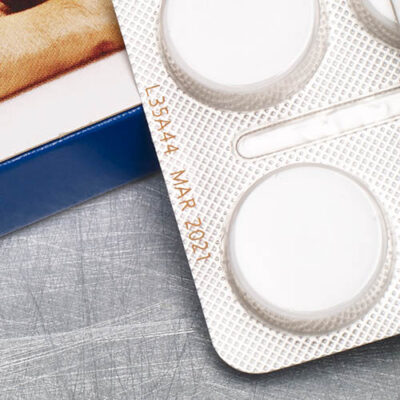
Print Samples
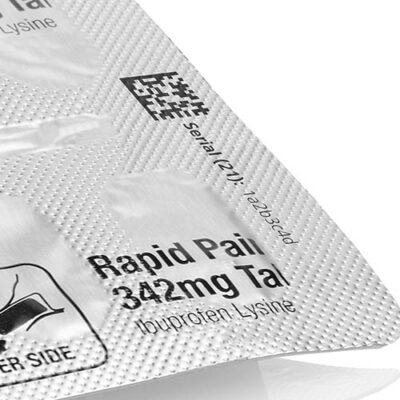
Practical requirements in pharmaceutical packaging range from precise single-dose coding to direct printing on film. On aluminum cover films, laser systems or specialized TIJ inks produce razor-sharp, high-contrast DataMatrix codes that remain perfectly legible even under mechanical stress during transport. For flexible laminates, thermal transfer printing, in turn, provides clear, abrasion-resistant best-by dates directly during the packaging cycle. High-resolution digital printing systems also allow the blank material to be individually printed directly on the production line at the chamber level. See the print quality for yourself: We’d be happy to provide free sample prints on your original blister packaging materials.
Send us your material sample for a free print test on your product.
Problem-Solving
Understanding the Application: We analyze your line speed, film materials, and the specific pharmaceutical standards for serialization.
Select a Technology: We determine the most suitable printing or laser technology for your blister packaging—from TTO to TIJ and laser to custom digital printing solutions.
Feasibility Testing: In our application lab, we test the legibility, contrast, and abrasion resistance of your original films under real-world conditions.
Integration and Support: We seamlessly integrate the labeling systems into your packaging lines and camera systems and provide long-term after-sales support.

Contact Us