
Thermal Inkjet Printing (TIJ)
Here's how cartridge-based inkjet printing works.
Thermal inkjet (TIJ) technology is becoming increasingly important in industrial marking. Whereas continuous inkjet (CIJ) systems or mechanical embossing stamps were primarily used in the past, today’s modern packaging industry demands maximum flexibility, razor-sharp print images for serialization, and absolutely clean production environments.
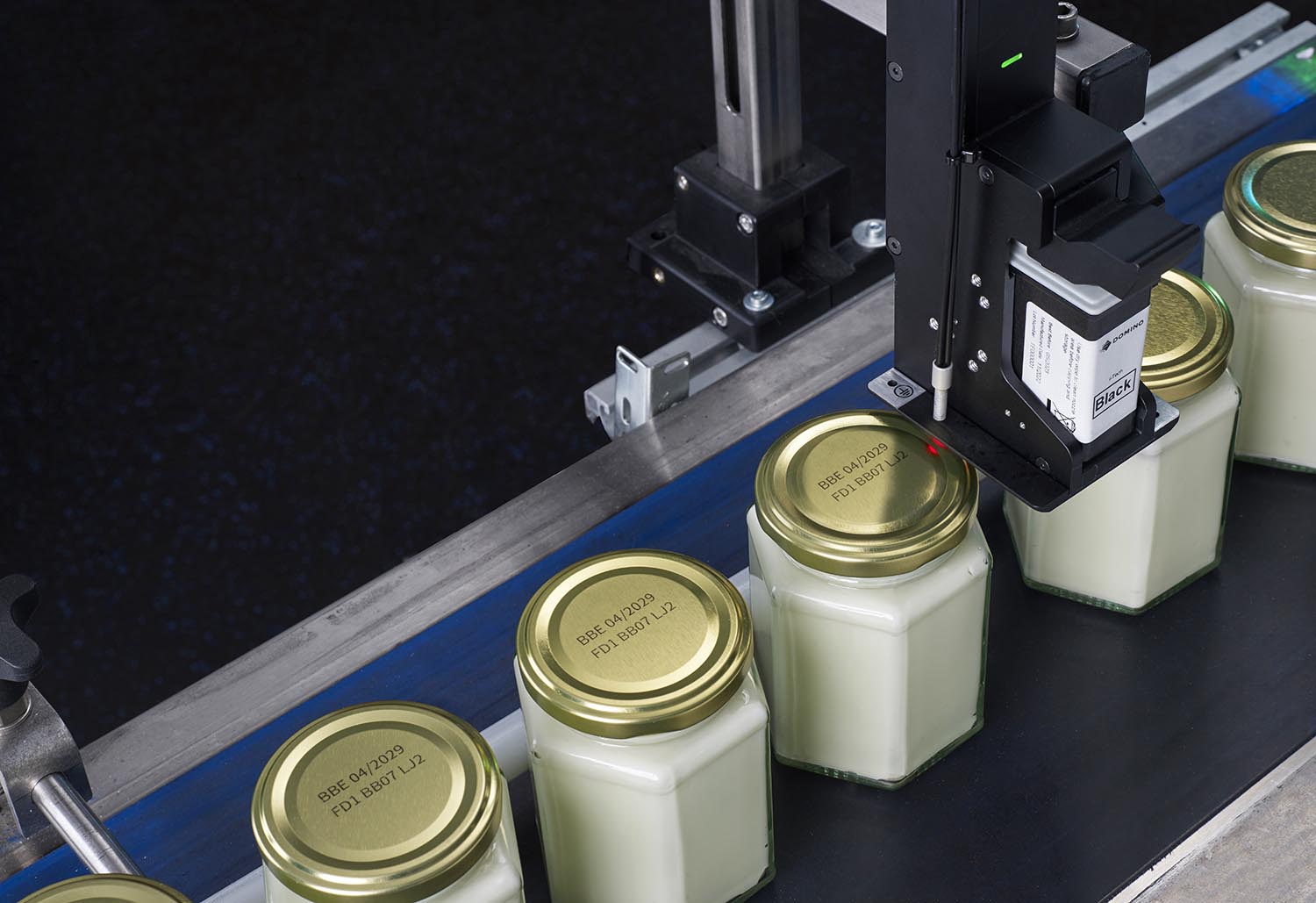
Thermal inkjet printing bridges the gap between high-resolution digital printing and rugged industrial performance. The process relies on maintenance-free ink cartridges that were specifically developed for contactless direct printing on packaging, films, and components on running production lines.
Contact UsThe Domino
GX Series
High-performance thermal inkjet printers for complex coding tasks, high line speeds, and seamless system integration.
Discover the Domino Gx SeriesThe Technology: The Thermal Drop-on-Demand Principle
Unlike continuous-spray systems, thermal inkjet operates using the drop-on-demand (DoD) method: Ink is ejected from the nozzles only when a print pulse is triggered.
Microscopic heat pulses
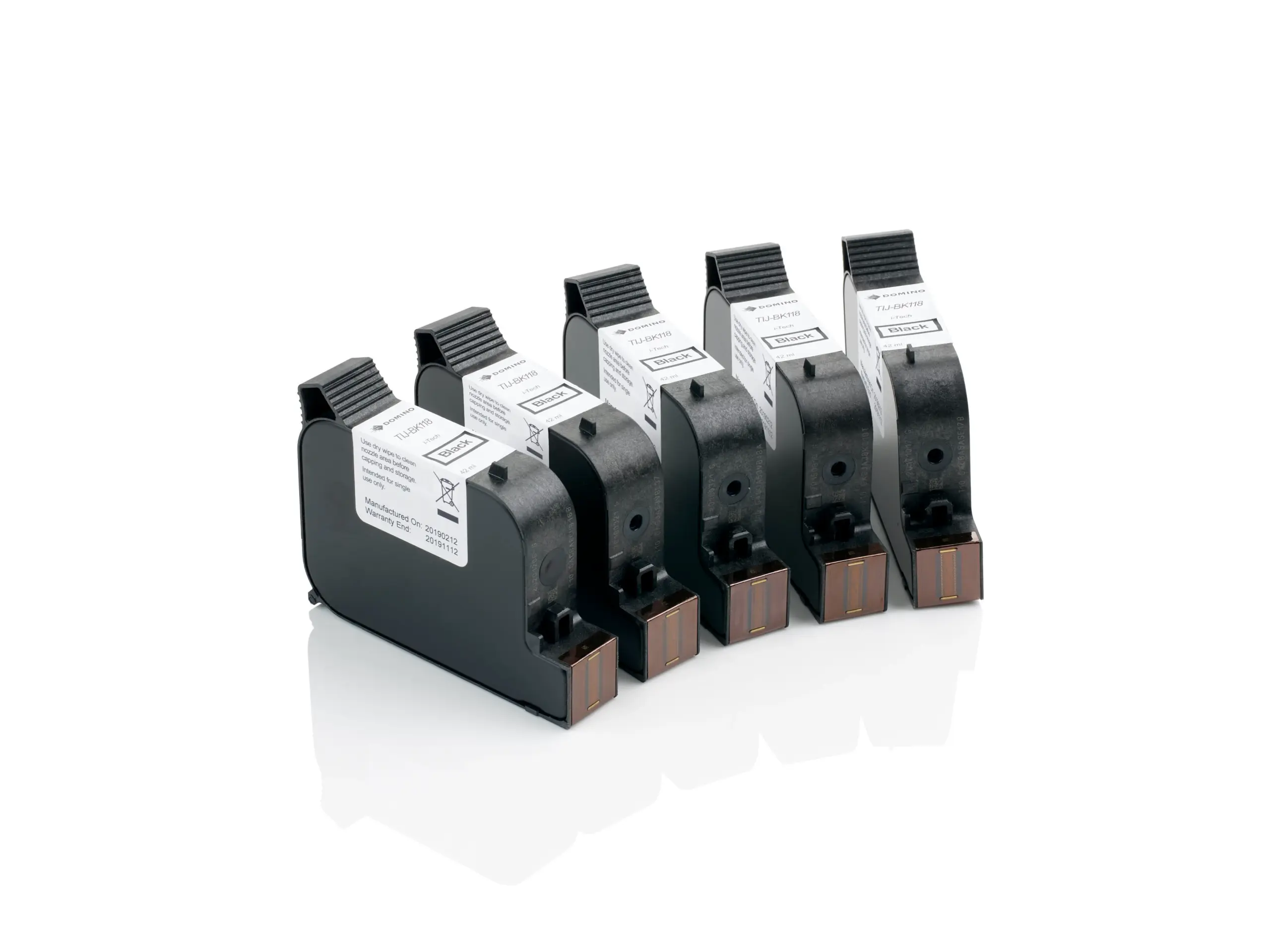
Inside the ink cartridge, there are tiny heating elements (resistors) located behind each nozzle. When a print command is issued, these elements heat up to over 300 °C within microseconds.
Bubble Formation and Droplet Ejection
The sudden heating causes a minimal amount of the solvent or water contained in the ink to evaporate. This creates a microscopically small vapor bubble (thermal bubble). The resulting excess pressure forces a precisely defined ink droplet through the nozzle opening directly onto the passing product.
Capillary Vacuum and Refilling
As soon as the heat pulse stops, the steam bubble collapses. The resulting vacuum draws fresh ink from the cartridge's reservoir. In a fraction of a millisecond, the nozzle has cooled down and is ready for the next pulse.
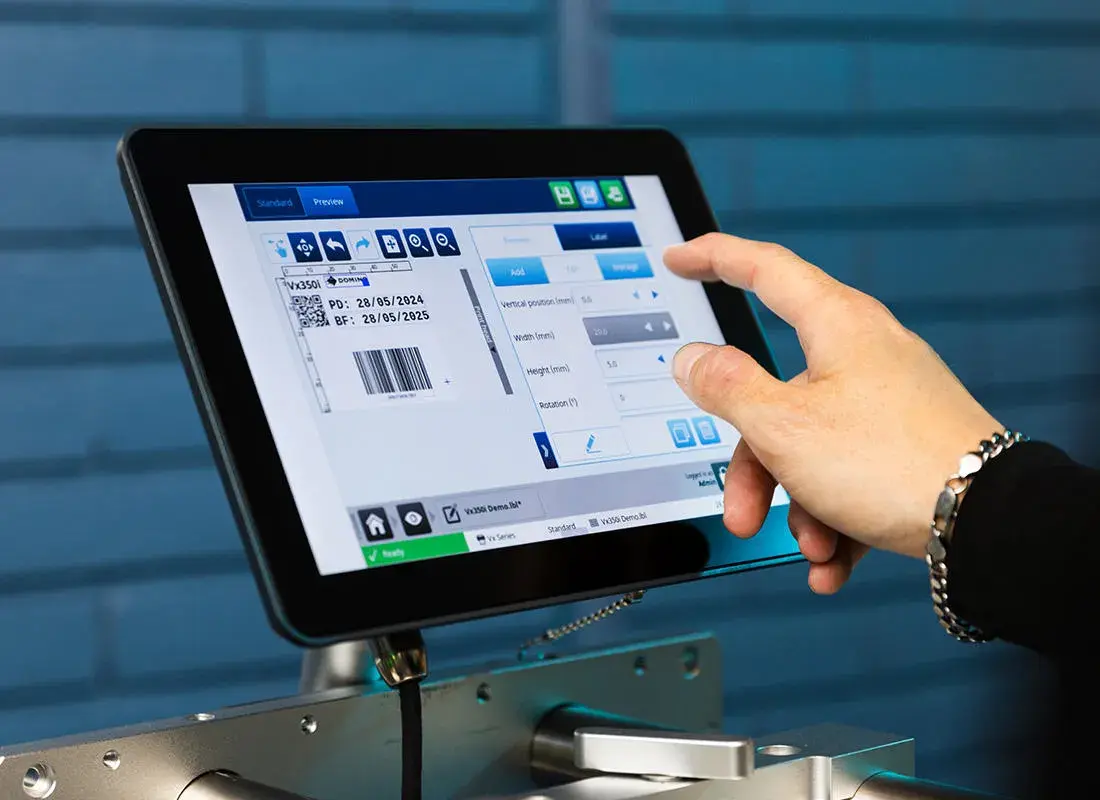
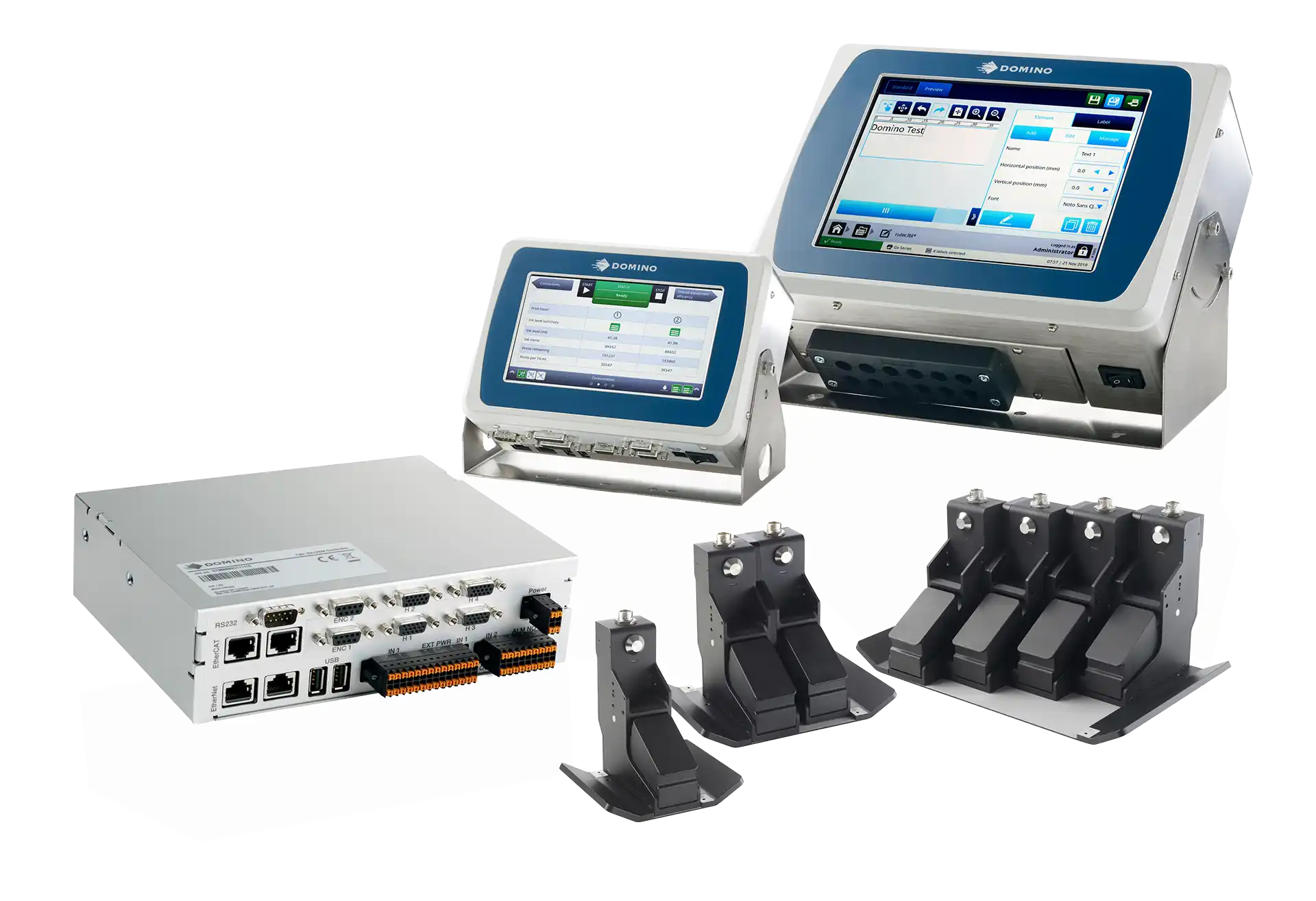
In thermal inkjet printers, the controller and printhead are separate. The printheads contain the cartridges; the controller handles the rest. Printheads come in countless variations. They can also be linked together to produce larger print images.
The Advantages of Thermal Inkjet Technology
Thermal inkjet technology combines high precision with minimal operational effort. Here is an overview of its key strengths:
Top-Notch Print Quality
Up to 600 dpi resolution: Crystal-clear results for even the smallest text, logos, and intricate graphics.
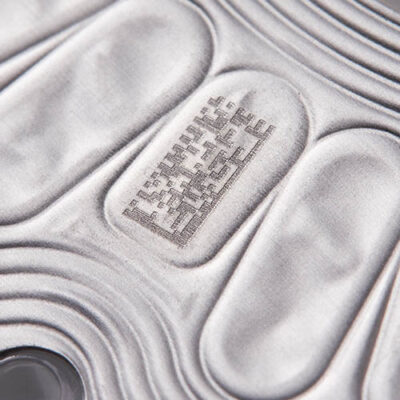
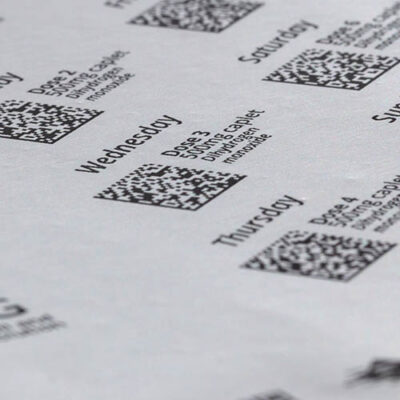
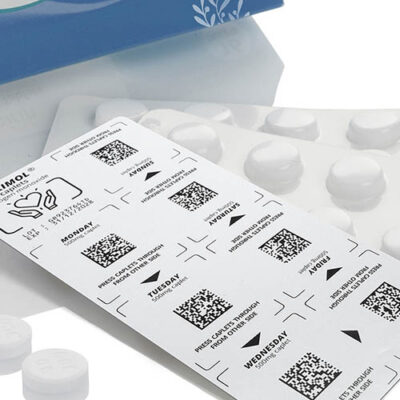
Perfect code readability: Ideal for GS1 Data Matrix, QR, and barcodes that comply with industry standards.
Precise print image: Exact ink dispensing without smudging or distortion.
Low-maintenance & clean
No nozzle cleaning required: Replacing the cartridge automatically replaces the print head as well.
Clean Handling: No need to handle open containers of ink, solvents, or cleaning fluids.
No wear and tear: Minimal downtime and extremely low operating costs.
Flexible & Easy to Integrate
Ready to use right away: No warm-up time or tedious startup sequences.
Compact design: Quick and easy installation directly into existing packaging systems.
Versatile Inks: A wide range of inks for a variety of substrates (paper, plastic, film).
The Limits of Thermal Inkjet Technology
As versatile as thermal inkjet technology may be, there are alternatives that are more cost-effective or technically better suited for certain applications. Keep the following points in mind when making your selection:
Small print spacing
The distance between the cartridge and the product must not exceed 1 to 5 mm. Other methods are better suited for products with a highly uneven surface or deep embossing.
Ongoing Consumables
For very high production volumes and continuous full-surface printing, cartridge costs may be higher than those of solvent-based CIJ systems or laser systems that do not use consumables.
Drying Time for Specialty Plastics
On extremely smooth non-paper surfaces, special ink is absolutely necessary to prevent smudging.
For very high production volumes and continuous full-surface printing, cartridge costs may be higher than those of solvent-based CIJ systems or laser systems that do not use consumables.

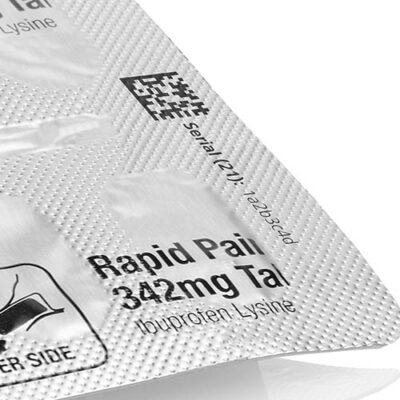
Applications & Substrates
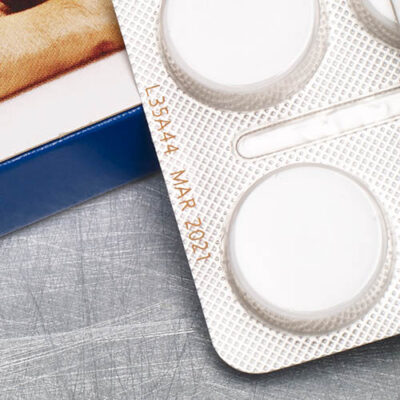
Whether it's absorbent cardboard or smooth film, TIJ covers a wide range of applications thanks to the combination of modern cartridge technology and specialized inks.
Cardboard & Paper: Folding boxes, outer cartons, package inserts (water-based inks)
Films & Plastics: Tubular pouches, blister films, stand-up pouches (quick-drying solvent-based inks)
Coated surfaces: glossy cardstock, varnished packaging (special inks)
Not sure if TIJ is right for your material? We'll test your substrate for free in our lab.
Go to the Sample Print ServiceThe Domino
GX Series
High-performance thermal inkjet printers for complex coding tasks, high line speeds, and seamless system integration.
Discover the Gx Series

Contact Us